
What are period pants, and why do so many teens start with them?
Period pants are knickers that do the job of a pad on their own, because the absorbent part is built into the gusset. Annahitah’s Pro Flo pants use a 4-layer design: a moisture-wicking layer sits next to the skin, with absorbent, breathable layers behind it. You put them on in the morning like any other pair, wear them, then rinse and wash them.
For a teenager, the appeal is what’s missing. There’s no tampon to learn about on day one, no pad to peel, stick and check after PE, and no wrapper crackling in a school toilet cubicle. On a day she thinks it might start, she wears a pair and gets on with her life.
The NHS lists period underwear alongside pads, tampons and menstrual cups as a standard option, describing it as absorbent, washable knickers with a leak-proof layer. Schools in England can order period pants through the government’s free products scheme, which tells you how mainstream they’ve become.
When do periods start, and what are the signs one is on its way?
Most girls start their periods around 12, and anywhere between 8 and 17 is within the normal range, according to the NHS. The first period tends to arrive about two years after breasts begin to develop. Underarm and pubic hair come first too. Annahitah’s own Starter Set page puts it plainly: periods can begin earlier than many parents expect, sometimes as young as nine.
Many girls also notice a clear or whitish discharge in their knickers for some months beforehand. It’s a normal part of puberty and a handy nudge to get a pair of pants and a small kit ready.
If she’s 10 or 11 and already developing, have a pair in her drawer and one in her school bag before anything happens. A first period that arrives in a maths lesson is far less of a drama when she’s already wearing the solution.
What does a first period look and feel like?
A first period is often a small reddish-brown stain rather than a flow of bright red blood. The NHS says exactly that, and adds that the body can take months to fall into a pattern, so the first few periods may be short and the gaps between them uneven. A second period that turns up six weeks later, or three months later, fits that settling-in pattern.
Once things settle, a cycle commonly runs every 21 to 35 days. Bleeding lasts 2 to 7 days, about 5 for most, and is heaviest in the first two days. The total loss across a whole period is around 20 to 90 ml, which is one to five tablespoons. It can feel like far more than that.
She may get mild cramps, or notice nothing beyond the stain. Both are common. Irregular periods are at their most common when they first begin, so a missed month in year one isn’t unusual.
Are period pants a good choice for a first period?
Yes, because a first period tends to be light and hard to predict, and period pants catch it without her needing to notice it’s started. Spotting lands on the gusset, not on her school trousers. She can wear a pair on the days she suspects it might arrive, then forget about it.
A grown woman who knows her cycle can plan a pad. A girl waiting for her first period has no cycle to plan around, so a product that’s already in place wins.
Pads and tampons still have their place, and plenty of girls use a mix once they know their flow. For the first year, a pair she can wear “just in case” removes most of the worry.
Which absorbency should a teenager start with?
A Heavy or Super Heavy pair gives a first-year teenager the most margin, and margin matters more than matching a flow nobody can predict yet. Annahitah grades its pants Light, Medium, Heavy and Super Heavy. Super Heavy styles hold 6 to 8 tampons’ worth of blood. Heavy and Medium styles hold 3 to 5 tampons’ worth per wear, according to the product pages.
Choosing more absorbency than she needs costs nothing in comfort. The pants still look and feel like knickers. Choosing too little means a leak on the one heavy day her body decides to have.
The Teenage collection is Heavy and Super Heavy only, which fits this logic. The Light styles are thongs sized from XS, made for light days and everyday wear, so they aren’t where a 12-year-old starts.
| Situation | Sensible pick | Why |
|---|---|---|
| Waiting for the first period | Heavy or Super Heavy | Catches spotting and a surprise heavier start |
| Days 1 and 2 | Super Heavy | The NHS says these are the heaviest days |
| Later, lighter days | Heavy | Enough margin, still knicker-like |
| Overnight or a sleepover | Super Heavy | Annahitah’s Super Heavy styles are designed for overnight wear |
| PE or a sports fixture | Super Heavy, short or seamless cut | Stays put under shorts and leggings |
For a teenager: start high, and step down once she knows her pattern.
Which styles suit teenagers?
Valentina is the natural starting point, because Annahitah calls it its signature teenage style, it’s made from 95% organic cotton, it’s Super Heavy, and it’s the only style sold in XXXS. The Starter Set page says it was named after the founder’s own daughter. It has a super-stretch waistband and sits high, so it stays put and doesn’t dig.
The rest of the teenage range gives her a choice of feel. Organic cotton styles such as Valentina and Lilah suit a girl who wants plain, soft fabric. The bamboo Brazilian brief, Serendipity, has a lacy front and a Heavy rating. The high-waist seamless styles, Shanti and Odessa, are Super Heavy, come in a short-style cut, and sit flat under leggings and PE shorts. Athena is a lacy Super Heavy brief for a girl who wants something that looks a bit more grown up.

| Style | Absorbency | Main material | Cut | Smallest size |
|---|---|---|---|---|
| Valentina | Super Heavy | 95% organic cotton | High waist brief | XXXS (UK 2-4) |
| Lilah | Heavy | 95% organic cotton | High waist brief, lace trim | XXS (UK 4-6) |
| Serendipity | Heavy | 94% bamboo | Brazilian brief, lace front | XXS (UK 4-6) |
| Shanti | Super Heavy | 90% nylon | High waist seamless cut, short | XXS (UK 4-6) |
| Odessa | Super Heavy | 91% nylon | High waist seamless cut, short | XXS (UK 4-6) |
| Athena | Super Heavy | 90% nylon | Lace brief | XXS (UK 4-6) |
Every pair is black. Five of the six (Valentina, Shanti, Odessa, Athena and Serendipity) carry an added, fully tested antimicrobial agent for extra odour control, and it contains no silver. Lilah is the plain, non-antimicrobial option. Either is fine for a teenager; it’s a preference, not a safety choice.
Let her choose. A girl who picked her own pair will wear it; one who was handed a pack may not. Once she’s narrowed it down, the full range of teenage period pants is six styles, so it’s a quick decision rather than an overwhelming one.

A fit for your flow.
Find your level of protection, then choose the shape that feels right for you.
Find your pair Explore styles, flow ratings & sizesWhat size period pants fit a teenager, and how do you measure?
Measure her hips and waist with a soft tape, then compare the numbers with the chart, rather than guessing from her age or her school uniform size. Hips go round the fullest part of the bottom and waist round the narrowest point, over thin clothes or underwear, snug but not tight.
| Size | UK dress size | Waist (cm) | Hip (cm) |
|---|---|---|---|
| XXXS | 2-4 | 60-64 | 79-83 |
| XXS | 4-6 | 61-65 | 84-88 |
| XS | 6-8 | 66-70 | 89-93 |
| S | 8-10 | 71-75 | 94-98 |
| M | 10-12 | 76-80 | 99-103 |
| L | 12-14 | 81-85 | 104-108 |
| XL | 14-16 | 86-90 | 109-113 |
Hips decide the size, because that’s where the gusset needs to sit close. If her waist and hip land in different rows, go with the hip row. If she’s between sizes, Annahitah says its sizes run on the generous side, so pick the smaller one.
Two practical notes. Only Valentina is sold in XXXS; every other teenage style starts at XXS, and so does the Starter Set. And a 12-year-old grows, so re-measure every few months.
How many pairs does a teen need, and how does she wash them?
Three to five pairs cover a full cycle, with washing and drying in between. That’s Annahitah’s own guidance and it holds for teenagers. Start with three. Add a fourth or fifth once you know whether she likes to change after PE or wants a fresh pair for the night.
The First Period Starter Set is built for this: three pairs, Valentina and Shanti in Super Heavy and Serendipity in Heavy, in one size from XXS to XXL. If you’d rather buy a trio than pick pairs one by one, the first period starter pants set is the straightforward route.
Washing is easier than parents expect. Rinse the pair in cold water after wearing, machine wash on a gentle 30°C cycle with other dark colours (no softener, no bleach, because both affect the absorbent layers), then hang to dry or tumble on low. Teach her the rinse step at the basin, since it’s the only extra job compared with ordinary knickers, and a pair looked after this way lasts 18 months to 3 years.
Can she wear period pants for school, PE and sleepovers?
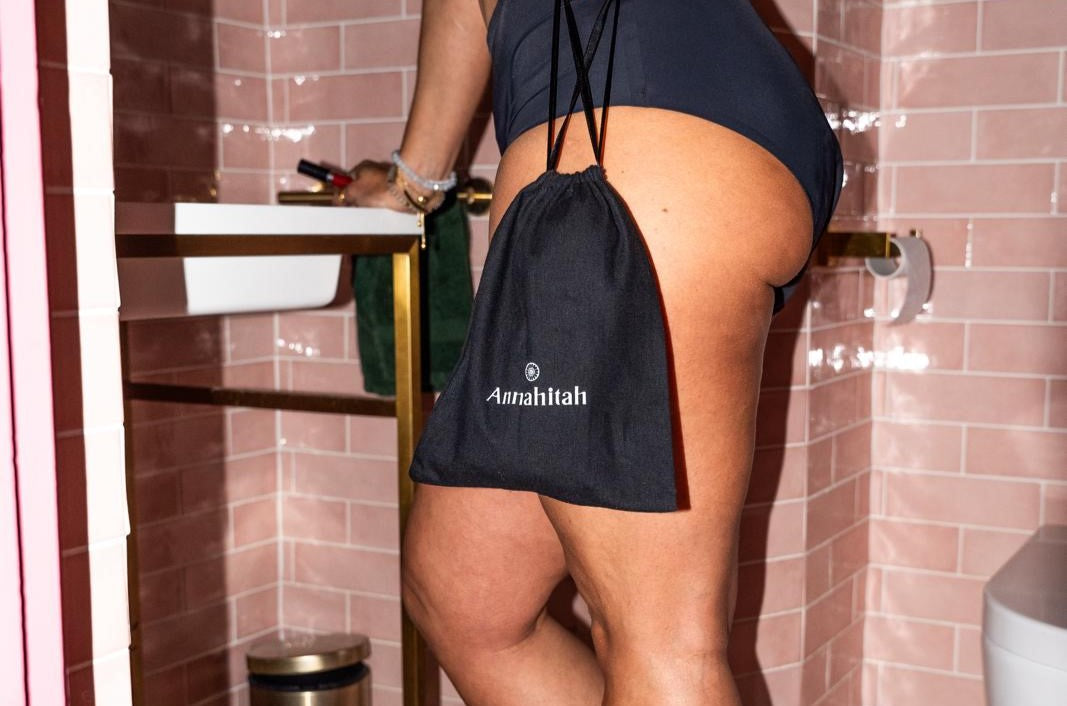
Yes, and most girls get through a school day in one pair, switching to a fresh pair at home. On a heavy day, a spare pair in the organic cotton Eco-bag that comes with every Annahitah order means she can change in a cubicle and carry the used pair home without anyone knowing. Toilet passes, free products and painkiller rules are in our school guide.
PE is where period pants earn their keep. In the Youth Sport Trust’s 2024 Girls Active survey of more than 15,000 pupils, 61% of girls aged 11 and over said they worried about leaking through their PE kit, and Women in Sport’s 2022 research found 78% of teenage girls avoid sport when they’re on their period. A pair that stays put during a bleep test, with nothing to shift and no string to think about, takes a large part of that fear away. The NHS period pain page lists gentle exercise such as swimming, walking and cycling among the things that can help with cramps, which is useful to know if she assumes PE has to be skipped. For leggings and fitted shorts, the seamless styles, Shanti and Odessa, sit flat.
Sleepovers and nights are where Super Heavy comes in. Annahitah’s Super Heavy styles are designed for overnight wear, and its advice for a heavy day is one pair in the day and a second Super Heavy pair for the night. Dark pyjama bottoms and a spare pair make a sleepover a non-event.
One thing period pants can’t do is swimming. Annahitah doesn’t make period swimwear yet, and ordinary period pants aren’t designed for water. A tampon, if she’s ready for one, or sitting out that lesson, are the honest options.
How do parents start the conversation without making it a big deal?
The NHS suggests treating periods as an ongoing conversation rather than one formal sit-down talk, using the correct words, and including boys in it too. That takes the pressure off everyone. A comment while unpacking the shopping does more than a speech.
Show her a pair of period pants before she needs them, and let her handle them and see they’re just knickers. Give her the washing instructions as a fact, not a chore. Tell her the NHS numbers, because “most girls start around 12, and it’s a small brown stain at first” is calming in a way that “you’ll know when it happens” isn’t.
Talk about leaks before they happen. Every woman has had one. A jumper tied round the waist, a dark skirt, a word with the school nurse: knowing the plan means a leak is a nuisance, not a catastrophe. And let her lead on how much she wants to say. Some girls want to talk it through. Others want the pants, the facts and to be left alone.
What does Annahitah do for girls beyond selling pants?
Annahitah visits local schools to teach girls who are starting puberty about sustainable, non-toxic period options, and partners with local schools on menstrual health education. It also educates mothers of pre-adolescent and teenage girls about period hygiene, so the conversation at home has something to lean on.
Every month the brand donates a selection of pants to disadvantaged women, and it sponsors local girls’ football teams, which sits well with the PE problem above. Annahitah has been a Certified B Corporation since November 2025, with a B Impact Score of 91.0 against the 80 needed to qualify, so those commitments have been assessed by B Lab rather than taken on trust.
The Starter Set page describes the range as created by a mum for the next generation. The pants are silver-free, the suppliers are certified by GOTS and OEKO-TEX, and the brand lets you choose antimicrobial or plain.
When should a parent speak to a GP?
See a GP if periods haven’t started by 15, or by 13 if there are no other signs of puberty such as breast development or body hair. Those are the NHS thresholds, and they exist so that nobody waits and worries for years.
Once periods have started, the NHS lists a few other reasons to book an appointment. Bleeding that lasts longer than seven days. Bleeding between periods. Signs of heavy periods, which include needing to change a pad or tampon every one to two hours, passing clots bigger than a 10p coin, soaking through clothes or bedding, or missing school because of it. Feeling tired or breathless alongside heavy bleeding is also a reason to go.
For pain, the NHS advice is to see a GP if cramps stop her doing her usual activities, and to contact a GP or 111 urgently if the pain is severe or worse than usual and painkillers haven’t helped. Paracetamol or ibuprofen, a hot water bottle and gentle movement cover most ordinary period pain.
Period pants don’t change any of this. They catch the blood, and the GP is for everything else. A girl who has heard “we’d go to the doctor if” from a parent is far more likely to speak up when something feels off.