
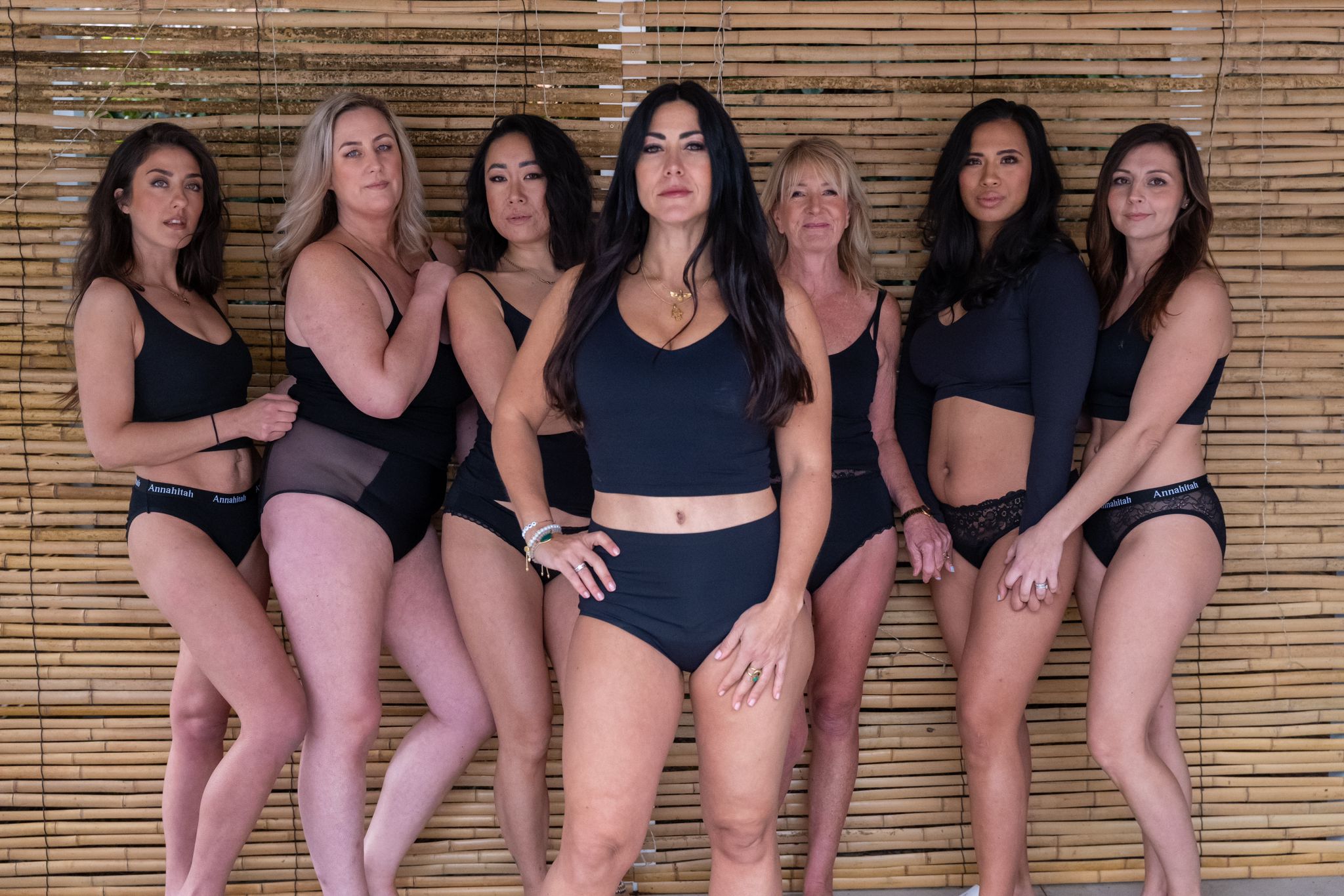


How much liquid do leak-proof pants hold?
Washable pants on the UK market publish figures from about 20 ml at the light end to around 75 ml at the top, and Annahitah publishes no ml at all. The brands that do give numbers: Brand A quotes up to 20 ml (Light), 30 ml (Moderate) and 50 ml (Super); Brand B says up to 40 ml; Brand C says up to 50 ml; Brand D holds a UL verification for at least 74 ml.
Annahitah grades its Pro Flo pants Light, Medium, Heavy and Super Heavy. The product pages describe Super Heavy styles (Shanti, Odessa, Athena, Valentina) as holding 6 to 8 tampons’ worth of blood, and Heavy and Medium styles (Serendipity, Lilah, Luna, Gaia) as 3 to 5 tampons’ worth per wear. For bladder leaks the site says only “from dribbles to heavier leaks”. There’s no urine figure, and this article won’t make one up.
Brands reach for tampons and teaspoons rather than a plain number partly because a number sounds exact when it isn’t. The sections below explain why.
What does 50 ml of urine look like?
Fifty millilitres is ten standard 5 ml teaspoons, or about a small espresso cup. Brand C’s pages say 50 ml is eight teaspoons in one place and ten in another, so if you convert yourself, take 10 x 5 ml as the conversion.
Brand E’s leak scale puts that into bladder terms:
| Brand E leak level | Volume per leak | Kitchen picture |
|---|---|---|
| Very light | Up to 10 ml | Dribbles to a few drops, up to 2 teaspoons |
| Light | 10 to 50 ml | Up to about 3 tablespoons |
| Moderate | 50 to 150 ml | Up to half a cup |
| Heavy | 150 to 300 ml | Up to 3 cups |
| Very heavy | Over 300 ml | What Brand E calls an average bladder filling |
Set against that scale, the washable market’s 20 to 75 ml covers the very light and light bands, and nudges into moderate at the top. That matches where NHS Wirral’s continence service and the Bladder & Bowel Community place washables: light to moderate leaks, with heavier leaks still needing disposables.
How do brands measure absorbency?
Most absorbency figures come from a soak-and-drain lab test called ISO 11948-1, also known as the Rothwell method. A sample is submerged in saline (a 9 grams per litre salt solution standing in for urine), lifted out, left to drain under gravity for a set time, then weighed. The weight gained, in grams, is the capacity. Five samples are tested and averaged. One gram of saline is about one millilitre, which is how a weight becomes an ml rating.
It’s a fair test of one thing: the most liquid the material can physically hold when nothing is pressing on it. It is not a test of what happens on a body. Nobody sits on the sample, nothing arrives in a surge, and there are no leg cuffs or seams in the test.
Brand D’s UL verification is the exception among the figures above. It used synthetic blood under pressure on a curved form, which is closer to wearing conditions than a flat soak, and came out at a minimum of 74 ml.
Why can a pant leak before it reaches its stated capacity?
Lab capacity ignores speed, pressure and position, which is why researchers at Southampton and UCL found the Rothwell figure only partly predicts leakage in use. Their work showed shaped pads leaked more than all-in-ones with the same lab capacity, leakage was higher overnight when lying down, and features such as leg cuffs made a difference the soak test can’t see. They favour a mannequin test that measures “absorption before leakage” instead.
For a washable pant, three things eat into the headline figure:
- Speed. A stress leak when you cough arrives all at once. If the top layer can’t pull it down into the core fast enough, it runs sideways before it’s absorbed.
- Pressure. Sit down on a gusset holding liquid and some of it squeezes back out. The soak test never does that.
- Position. Lying on your side moves liquid to the edge of the gusset, where there’s less absorbent fabric.
Treat any ml figure as a ceiling. The usable amount, before you feel wet or see a mark, is below it.

A fit for your flow.
Find your level of protection, then choose the shape that feels right for you.
Find your pair Explore styles, flow ratings & sizesDo period pants hold the same amount of urine as blood?
No, a pant rated for menstrual blood won’t necessarily hold the same volume of urine, and the ratings can mislead in both directions. Urine is thin and arrives fast, so the gusset needs to wick quickly. Menstrual blood is thicker, arrives slowly and may contain clots, which Brand E and Brand F both say incontinence products handle poorly. Brand E tells customers not to use its washable incontinence pants for periods.
The evidence that liquid type matters is good. A 2023 study in BMJ Sexual & Reproductive Health, from Oregon Health & Science University, tested 21 period products with real blood rather than saline. Period underwear held only a few millilitres of blood against much higher saline ratings, because saline is thin and uniform and blood is neither.
The practical point for bladder leaks: most ml ratings are saline-based, and saline is the thin liquid the standard test uses as a stand-in for urine, so a saline figure is a closer guide to urine than to periods. Annahitah’s tampon equivalents are blood figures. Don’t translate them into a urine volume. Use the brand’s own words, dribbles to heavier leaks, and the level system.
What counts as light, moderate or heavy bladder leakage?
There are two ways to grade leakage, per leak and per day, and the two don’t always point to the same product. Brand E’s leak scale, above, is per leak: very light up to 10 ml, light 10 to 50 ml, moderate 50 to 150 ml, heavy 150 to 300 ml. Its buying advice, on a separate page, is to choose by total daily leakage, graded by drops from 1 to 9, and not to over-buy absorbency, since it costs more and creates more waste.
Keep the two apart. A person with a dozen tiny dribbles and a person with one large urge leak can have the same daily total and need different products. The dribbler needs something comfortable to wear all day; the person with one big leak needs something that copes with a surge.
For per-leak sizes at the light end, the clearest description in use is Brand E’s: dribbles to a few drops for very light, up to about three tablespoons for light. “A few ml per leak” is a description, not a statistic, and no clinical body publishes a per-leak figure for light leakage.
Our stress versus urge guide explains why the pattern of leaking tells you more than the volume.
Which Annahitah style suits which leak?
Annahitah grades from Light to Super Heavy and describes its bladder-leak coverage as dribbles to heavier leaks, so match the level to how your leaks arrive rather than to a number.

- A few drops on a cough, sneeze or run: a Light thong such as Venus, Nirvana or Eden.
- Regular small leaks through the day: a Heavy style such as Serendipity (bamboo Brazilian brief) or Lilah (organic cotton lace brief).
- Larger or less predictable leaks, or overnight: a Super Heavy style such as Shanti, Odessa, Athena or Valentina. These are the ones the site describes as designed for overnight wear.
Six of those styles (Shanti, Odessa, Athena, Valentina, Serendipity, Venus) carry a silver-free antimicrobial finish for odour control. If you’re unsure which band you’re in, start one level higher than you think and work down once you know your pattern; you can see capacity by style across the nine pants in the incontinence collection.
How do you know when to change leak-proof pants?
Change when the gusset feels wet, not by the clock. Brand C’s advice is to change as soon as you’re wet, and the NHS says changing pads promptly lowers the risk of infection, so a damp pant is a pant to swap. Annahitah publishes no hours-per-pair figure.
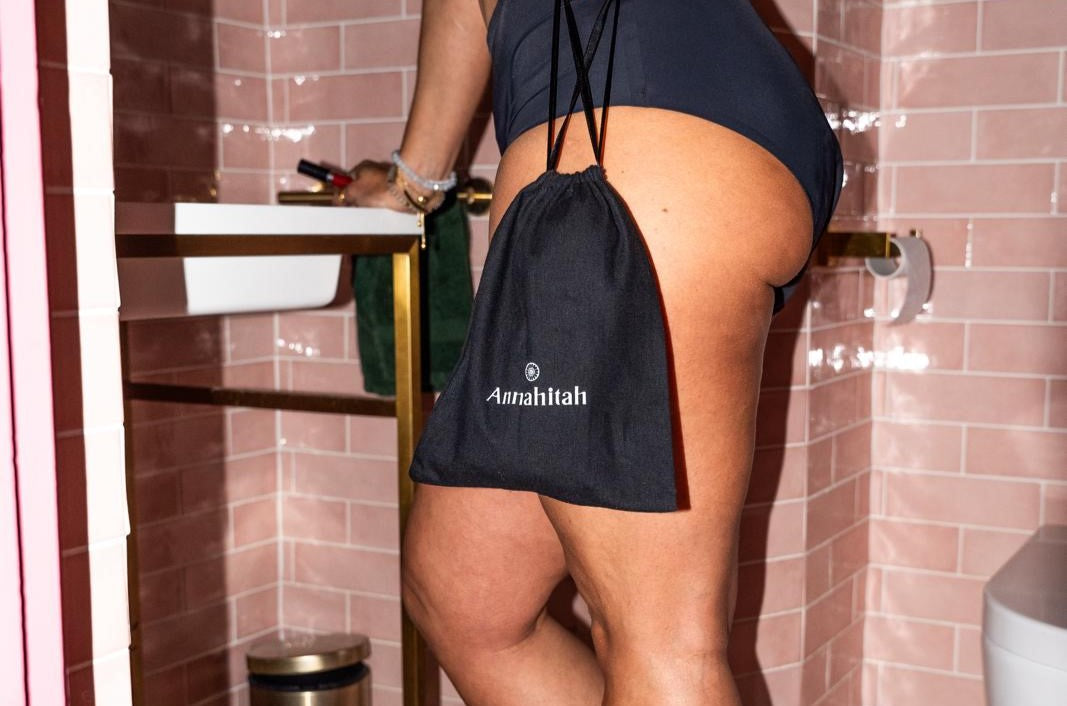
A spare pair in a bag makes this painless. Every Annahitah order ships with a washable organic cotton Eco-bag for the dry pair going out and the used pair coming home. Rinse the used pair in cold water as soon as you can, then it waits for the 30°C wash.
When is a bigger pant the wrong answer?
If your leaks are getting larger, more frequent or more sudden, or come with blood, pain or infection symptoms, the answer is a GP appointment rather than a higher absorbency. The NHS says to see a GP if you have any type of urinary incontinence, and NICE says absorbent products are a coping strategy while you wait for treatment or alongside it, not a treatment in themselves. Pelvic floor training for at least three months is the first-line treatment for stress and mixed leaks; bladder training for at least six weeks for urge.
Some signs need urgent help, whatever pants you wear:
- Blood in your urine, even once, even a little, even if you’re unsure. Pink, red or dark brown urine means an urgent GP appointment or NHS 111. It can be a sign of cancer.
- UTI symptoms: burning when you pee, going more often, cloudy or smelly urine, pain low in your tummy or back, or a temperature. Women aged 16 to 64 can start with a pharmacist; get urgent GP or 111 help if you’re over 65, pregnant, diabetic, in pain, passing blood, not improving after 48 hours, or having repeated infections (two in six months or three in a year).
- Leaking that’s new or suddenly worse in an older person, which can itself signal a UTI.
- Confusion or drowsiness with any of the above: 999 or A&E.
NICE lists further reasons for specialist referral: persistent bladder or urethral pain, a bladder you can still feel after emptying, a pelvic lump, bowel leakage too, signs of a nerve condition, difficulty emptying, or past pelvic surgery or radiotherapy. A bigger pant hides those. A GP finds them.