



Are period pants hygienic?
Yes, a pair of period pants that’s changed before it saturates and washed after every wear is as hygienic as any clean pair of knickers. The question comes up a lot. Mintel found that six in ten British women who hadn’t tried period pants believed reusables were less hygienic than disposables. The belief is common. The evidence for it isn’t.
What makes any period product hygienic is the same: fluid moved away from the skin, a change before things get damp, and clean fabric next time. Period pants do the first by design. The rest is up to you, and it isn’t hard.
Is period blood dirty?
No, menstrual fluid isn’t dirty. It’s blood, tissue from the lining of the womb and vaginal fluid, and fresh from the body it has little smell.
What changes over time is bacteria. Fluid left warm and damp against skin gives the bacteria that live there something to break down, and that’s when odour appears. The same is true of sweat in a sports bra or milk on a baby’s vest. The fluid isn’t the problem. Time and dampness are.
Brand A describes a faint metallic smell as normal; that’s the iron in blood, not a sign of anything wrong.
Do period pants smell?
No, a fresh pair of period pants shouldn’t smell, and if one does it’s telling you something: it’s been worn too long, it wasn’t rinsed well enough, or it didn’t dry fully. Which? found the best pairs it tested in 2026 had no smell after a full day’s wear, while lower-scoring pairs started to smell slightly from about five hours.
The three causes in order of how common they are:
1. Worn too long. Fluid sitting in a saturated core for hours gives bacteria time to work. Change when the gusset feels damp. 2. Not rinsed. Blood left in the fabric through a 30°C wash can stay in the fibres. Rinse cold before the machine. 3. Not dried. A pair that’s still damp in the gusset after a day on the airer has given bacteria a head start. Dry fully before you put it away.
Why do period pants smell after washing?
Period pants that smell straight out of the wash have usually been washed with fabric conditioner, washed without a cold rinse first, or left damp in the machine. Conditioner coats the fibres and stops the top layer wicking, which is why period pant brands tell you not to use it; Annahitah says it affects absorbency and the four-layer construction. Brand B’s advice for pants that have developed a smell is a cold soak with bicarbonate of soda, then a long wash cycle; Annahitah’s standard care is a cold rinse, a gentle 30°C wash with other darks, no softener and no bleach, then hang drying.
If a pair still smells after that, it may have reached the end of its life. Annahitah expects 18 months to three years from a pair with good care.
Can period pants cause thrush or BV?
No, there’s no evidence that period pants cause thrush or bacterial vaginosis, and NHS guidance on both points to the same conditions to avoid: damp, heat, tight clothing and scented products. Those conditions can happen in any underwear, pad or liner.
Thrush is a yeast overgrowth. The NHS says candida thrives in warm, damp areas, and its advice is to wear cotton underwear, avoid tight underwear and tights, dry yourself thoroughly after washing and skip douches and vaginal deodorants. A period pant worn until it’s soaked and then kept on is a warm, damp place. A period pant changed when it feels damp isn’t.
BV is a shift in the vagina’s natural bacteria, which makes it less acidic. The NHS lists the things that upset that balance: perfumed soaps and bath products, vaginal washes and douches, antiseptic bath liquids, strong detergents on underwear and smoking. About half of people with BV have no symptoms. Period pants don’t appear on that list, but strong detergent does, which is one more reason to wash them in something mild and unperfumed.
The NHS do-and-don’t lists, mapped onto period pants:

| NHS advice (thrush, BV, vaginitis) | What it means for period pants |
|---|---|
| Wear cotton underwear; avoid tight underwear | Choose a cotton-body style if you’re prone to thrush, and size so the gusset sits snug but the pant isn’t tight |
| Dry thoroughly after washing | Change a pair as soon as the gusset feels damp; don’t sit in a saturated pair |
| Avoid strong detergents on underwear | Wash pants in a gentle, unperfumed detergent |
| Avoid perfumed soaps, deodorants, douches | Don’t add scented products to mask odour; fix the cause instead |
| Wash the vulva with warm water only | The same applies on period pant days; nothing extra is needed |

A fit for your flow.
Find your level of protection, then choose the shape that feels right for you.
Find your pair Explore styles, flow ratings & sizesAre antimicrobial period pants more hygienic?
No, not necessarily, and both Hertfordshire County Council and Which? say antibacterial additives are largely unnecessary if pants are changed regularly. The additive that has drawn the most attention in the UK is silver.
Which? tested period pants for silver in November 2023 and found it in several pairs, with experts raising concerns that silver could harm the beneficial bacteria that keep the vagina acidic. Which? also cited a 2018 US FDA study showing nano silver can kill lactobacillus, the bacteria you want to keep. Germany’s BfR has said that biocides such as silver chloride need approval under EU rules and may disturb skin flora, and the EU banned silver zeolite in textiles in March 2026.
Annahitah takes a middle position. None of its pants contain silver. Six styles (Shanti, Odessa, Athena, Valentina, Serendipity, Venus) carry a silver-free, certified antimicrobial agent for extra odour control; six others (Lilah, Aurora, Luna, Gaia, Nirvana, Eden) carry no treatment. If odour is the thing that puts you off reusables, or you’re managing endometriosis with unpredictable days, antimicrobial odour-control pants are the six styles to look at. If you’d rather keep things plain, the untreated styles do the same job with regular changes.
Is it safe to wear period pants all day?
Yes, on most days, provided the absorbency matches your flow and you change the pair when it feels damp rather than by the clock. Several UK brands quote between 8 and 12 hours per pair, and Which? says general hygiene advice is no more than 12. Annahitah publishes no hours figure; our wear-time guide covers how to judge it by feel.
How do you keep period pants hygienic?
Rinse in cold water as soon as you take them off, wash on a gentle 30°C cycle with an unperfumed detergent, skip fabric softener and bleach, dry them fully and store them dry. That’s the whole routine, and it’s Annahitah’s own.
A few details that make the difference:
- Rinse until the water runs clear. This is the step that stops smell.
- Wash with other darks. Period pants don’t need a load of their own.
- Dry in moving air. Which? found most pairs air-dry within 24 hours. A gusset still damp the next evening is a sign the room is too still.
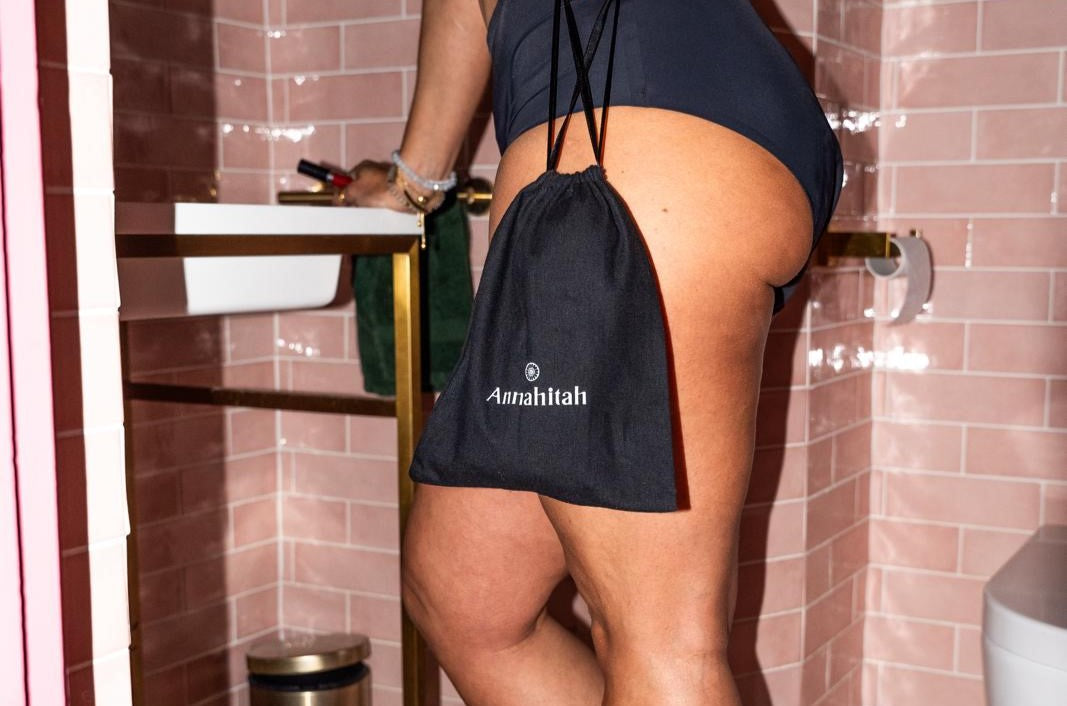
- Carry used pairs in a washable bag when you’re out. Annahitah ships every order with an organic cotton Eco-bag for that purpose, washable at 30 or 40°C.
- Don’t tumble hot. Annahitah allows a low-heat tumble; it says to avoid hot temperatures.
One honest caveat. Germany’s BfR says a 30 to 40°C wash won’t kill all bacteria and suggests 60°C where the fabric can take it. Most brands, Annahitah included, cap at 30°C to protect the layers. That’s a trade-off between a hotter wash and a longer-lasting pair, and rinsing out the blood first, which both sides recommend, closes most of the gap.
When should you see a GP or pharmacist?
See a pharmacist or GP if you have itching, soreness, swelling, unusual discharge or a fishy smell, because those are signs of thrush, BV or another irritation that a change of underwear won’t fix. The NHS says healthy discharge has no strong smell; a fishy smell can mean BV and a thick, white, cottage-cheese discharge can mean thrush. Both are common and treatable.
Period pants aren’t the first cause to rule out. Antibiotics, diabetes, pregnancy, HRT and a weakened immune system all raise thrush risk according to the NHS, and none of them have anything to do with what you’re wearing. If thrush keeps coming back, that’s a GP conversation whatever period products you use.