

What counts as a heavy period?
A heavy period is one that gets in the way of your life, and the NHS lists specific signs to look for. Heavy menstrual bleeding (the medical name is menorrhagia) is common and may be normal for you, but you should know when yours crosses the line.
The NHS says you may have heavy periods if you:
- need to change your pad or tampon every one to two hours, or empty your cup more often than it recommends
- need two products at once, such as a pad and a tampon
- bleed for more than seven days
- pass clots larger than about 2.5 cm, roughly the size of a 10p coin
- bleed through to your clothes or bedding
- have to miss exercise, work or other daily activities because of your period
- feel tired or short of breath a lot of the time
You don’t need to measure anything. NICE guidance says care for heavy bleeding should focus on how it affects your quality of life rather than on quantifying blood loss. If it feels heavy and it’s affecting your days, that’s reason enough to act, on your protection and on a GP visit.
What is period flooding?
Flooding is a sudden heavy gush of blood that overwhelms whatever you’re wearing and soaks through to clothes or bedding before you can react. There’s no formal NHS definition; the word describes the experience rather than a measured amount.
It tends to happen in the first two days, when the NHS says bleeding is heaviest. If flooding is part of your pattern, keep a note of which days it happens and how many changes each day takes, so you can show your GP something concrete.
Period pants help with flooding in two ways. The gusset catches a gush that a pad might miss, and the leak-proof layer buys you time to reach a bathroom. Regular flooding is one of the things to raise with your GP.
Can period pants cope with a heavy flow?
Yes, the top absorbency tier from UK brands is built for exactly this, though every capacity figure you’ll read is the brand’s own claim rather than an independent measurement. Which? appears to be the only UK organisation that tests period pants independently, soaking the gusset with water and timing a 5 ml drop; its scores sit behind a paywall.
Wearing pants alone on your heaviest day is realistic for many people; others pair them with a cup or pad until they know their flow. Both are fine. Four things make heavy-flow pants work:
- Absorbency at the top of the range, not the middle.
- A gusset that runs from the front waistband to the back waistband, so a gush or a lie-down doesn’t escape the edges.
- A snug fit so nothing gapes at the leg.
- A spare pair within reach.
How much do the heaviest period pants hold?
UK brands quote their top tier at between about four and twelve tampons’ worth, which is a wide spread with no shared test behind it. Which? gives the same range in its own words: heavy pants hold roughly four to twelve regular tampon equivalents.
Here’s how the brand claims line up, as published on their own sites in October 2026.
| Brand | Heaviest tier | Brand’s own capacity claim |
|---|---|---|
| Annahitah | Super Heavy | 6 to 8 tampons’ worth (no ml figure published) |
| Brand A | Super Heavy | up to 60 ml, 12 tampons or 8 pads |
| Brand B | Super | up to 50 ml, 10 tampons (based on a 5 ml tampon) |
| Brand C | Overnight / Heavy | up to 6 regular pads’ worth |
| Brand D | Super Heavy (no capacity published); Heavy tier below it | Heavy: up to 4 tampons’ worth |
| Brand E | Heavy | around 4 to 6 pads’ or tampons’ worth, per its blog |
Read the table with care. Brand B says its tampon figures assume a 5 ml tampon; other brands don’t say what size they mean, so “8 tampons” from two brands may not be the same volume. Brand A’s product page shows two different figures in different places, and Brand D lists a Super Heavy tier in its menu without publishing what it holds. None of this makes the pants bad. It means the number on the box is a guide, and your own heaviest day is the only test that counts.
Annahitah publishes tampon equivalents rather than millilitres: the Super Heavy styles Shanti, Odessa, Valentina and Athena hold six to eight tampons’ worth per day of wear.
Which style is best for heavy days?
High-waist and full briefs with a long gusset give the most coverage front and back, which is why the heaviest absorbencies across UK brands sit in those cuts and not in thongs. Brand E makes the same point from the other direction: for heavy flow and sleep, choose pants whose absorbent area reaches both waistbands rather than stopping at the crotch.

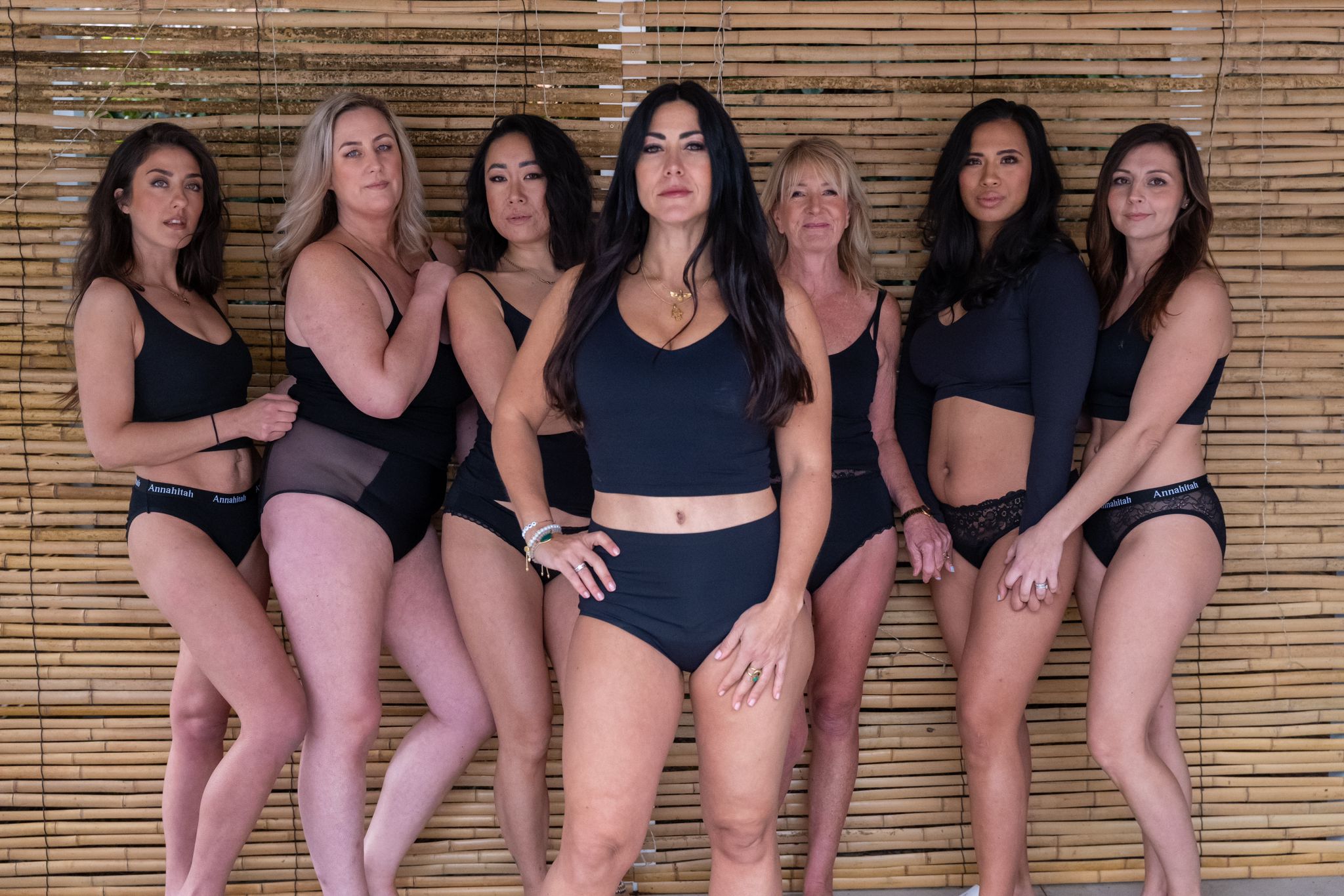
Annahitah’s four Super Heavy styles are all full cuts. Shanti and Odessa are high-waisted, seamless and in the Short collection too; Athena is a lace-trimmed high-waist brief; Valentina is an organic cotton brief that also comes in teen sizes down to XXXS. Shanti and Odessa are the two the brand recommends for postpartum bleeding and endometriosis, and all four have the brand’s silver-free antimicrobial odour control.
For heavy days you’d also want a snug fit at the leg. Annahitah’s sizes run generous, so pick the smaller size if you’re between two. The full breakdown of cuts is in our styles guide.

A fit for your flow.
Find your level of protection, then choose the shape that feels right for you.
Find your pair Explore styles, flow ratings & sizesHow often should you change on a heavy day?
Change when you feel dampness against your skin, notice any smell, or see the gusset edge darkening, which on a heavy day may mean twice before bedtime. Which? gives similar cues (wetness, smell, visible leaks) and adds that nobody should wear one pair for longer than 12 hours for hygiene reasons, whatever the brand says it can hold.
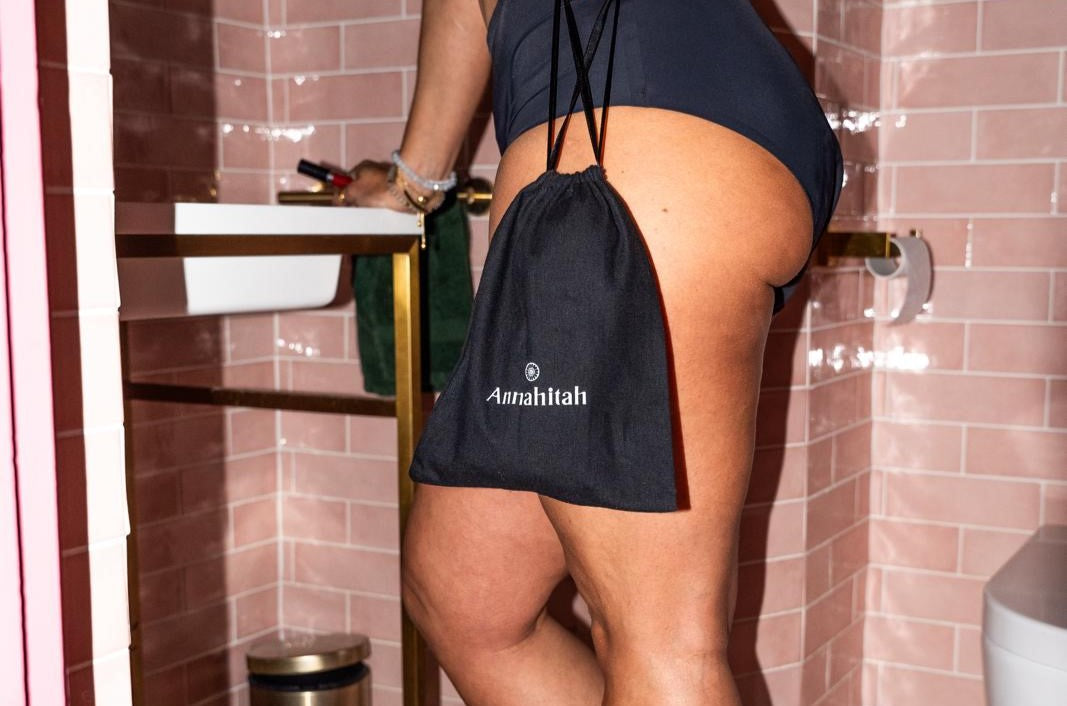
A fresh pair before bed is standard. Annahitah’s guidance for a super heavy day is one Super Heavy pair through the day and a second Super Heavy pair for the night, and it sends a washable organic cotton Eco-bag with every order so you can carry the spare and bring the used pair home.
Should you wear a backup with period pants on your heaviest day?
Yes, until you know your flow, a cup, tampon or pad as backup is sensible, and plenty of people keep that habit for days one and two. The independent guide at Moral Fibres suggests trying new super heavy pants at home first and keeping a cup or pad in reserve for the worst days; Brand E calls it doubling up.
Two cautions. If you always need two products at once, the NHS counts that as a sign of heavy bleeding, so mention it to your GP. And two pairs of period pants on top of each other rarely helps; a second Light pair holds less than one Super Heavy and feels bulky.
Clots are a separate worry for heavy bleeders. Period pants absorb the liquid around a clot but not the clot itself, so Annahitah’s advice is to wipe it away with tissue and flush, then carry on. Clots bigger than a 10p coin are on the NHS list of heavy-bleeding signs.
Can heavy periods make you anaemic?
Yes, the NHS describes heavy periods as a very common cause of iron deficiency anaemia, and it lists tiredness, lack of energy, shortness of breath, noticeable heartbeats, paler skin and headaches as the usual symptoms. Less common signs include a strange taste in your mouth, a sore tongue, hair loss, itchiness, mouth ulcers and restless legs.
If you bleed heavily and recognise yourself in that list, see your GP. A blood test checks your iron levels, and treatment is usually iron tablets for around six months alongside treating the bleeding itself. Period pants make heavy days easier to live with; they don’t replace the blood test.
When should you see a GP about heavy bleeding?
See your GP if heavy periods are affecting your life, have been going on for some time, or come with severe pain, bleeding between periods or after sex, or pain when you pee, poo or have sex. That’s the NHS list, and it applies whether you use pants, pads or anything else.
Go sooner rather than later if:
- you’re changing protection every one to two hours or soaking through clothes or bedding
- your periods last longer than seven days
- you’re passing clots bigger than a 10p coin
- you feel tired or breathless much of the time
- your period is stopping you doing normal things, such as going to work or exercising
- the heaviness is new for you, or getting worse
Heavy bleeding has many possible causes, including fibroids, endometriosis, adenomyosis, polycystic ovary syndrome, pelvic inflammatory disease, bleeding disorders and some medicines. Your GP may suggest the hormonal coil, the combined pill, tranexamic acid tablets or anti-inflammatory painkillers, and may run a blood test for anaemia. NICE guidance says referral to a specialist is considered when treatment doesn’t work, symptoms are severe or fibroids are 3 cm or larger.
None of this is a reason to feel alarmed. Heavy periods are common, especially in the teenage years and the forties, and they’re treatable. Good period pants and a GP appointment aren’t alternatives; you’ll want both.
Which Annahitah pants suit heavy flow?
The Super Heavy styles Shanti, Odessa, Valentina and Athena are the ones to choose, each holding six to eight tampons’ worth with full back coverage. Shanti and Odessa are the two to pick for the heaviest days and nights, and they’re also the brand’s recommendation for postpartum and endometriosis.

| Style | Cut | Fabric | Antimicrobial (silver-free) | Sizes |
|---|---|---|---|---|
| Shanti | High-waist, seamless, lace trim | 90% nylon / 10% spandex | Yes | XXS to XXL |
| Odessa | High-waist, seamless | 91% nylon / 9% spandex | Yes | XXS to XXL |
| Athena | High-waist brief, lace | 90% nylon / 10% spandex | Yes | XXS to XXL |
| Valentina | Brief, teen-friendly | 95% organic cotton / 5% spandex | Yes | XXXS to XL |
Once you’ve worked out that days one and two need the top tier, shop super heavy and start with two pairs, one for the day and one for the night, then add a Heavy pair such as Serendipity or Lilah for days three and four. For a teenager with heavy periods, Valentina is the one that goes down to XXXS.