
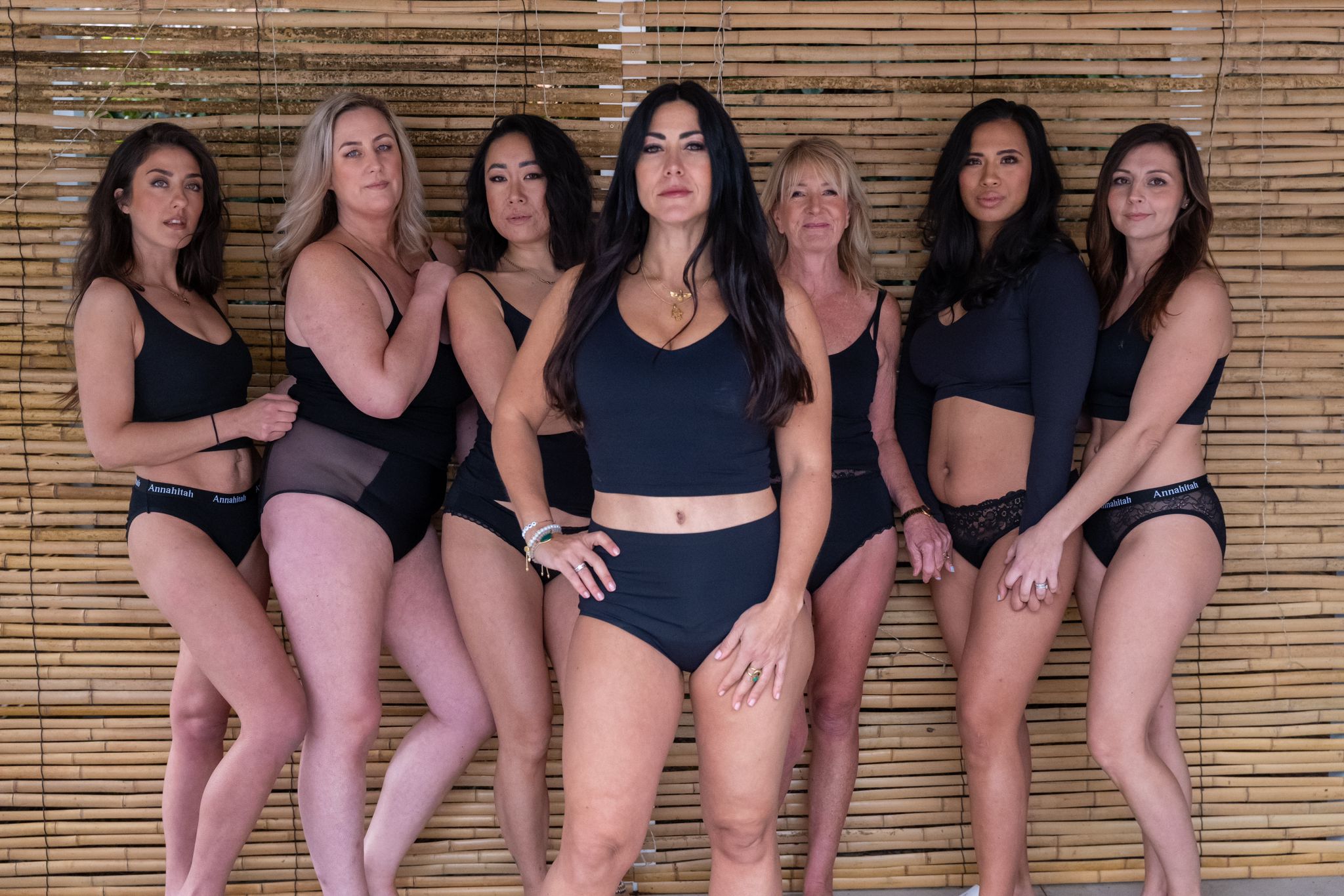


Can you wear period pants to school all day?
Yes, most girls get through the school day in one Heavy or Super Heavy pair and change at home, with a spare in the bag for the heaviest days. Annahitah’s Super Heavy styles hold 6 to 8 tampons’ worth of blood, and its Heavy styles 3 to 5 tampons’ worth per wear. Annahitah’s own advice for a super heavy day is one pair through the day and a second for the night.
The days to plan for are the first two of a period, when the NHS says bleeding is heaviest. Pick a Super Heavy pair (styles such as Valentina, Shanti, Odessa and Athena) and pack a second one. On lighter days a Heavy pair such as Serendipity or Lilah is plenty.
Nobody can see them. They’re black knickers with a thicker gusset, and under a school skirt or trousers there’s nothing to show.
Which style works under a school skirt, trousers or PE kit?
A high-waist brief sits flat under a uniform skirt, and the short-style seamless cuts give extra coverage under PE shorts and leggings. Which one suits her depends on what she wears most.

| Uniform or kit | Style that works | Annahitah examples | Why |
|---|---|---|---|
| School skirt or dress | High-waist brief | Valentina, Lilah, Athena | Looks like ordinary knickers, stays put when she sits |
| School trousers | Brief or seamless cut | Valentina, Odessa, Shanti | No lines through fitted trousers |
| PE shorts or leggings | Short-style seamless cut | Shanti, Odessa | Sits flat, nothing to shift during running or jumping |
| Heavy day, any uniform | Super Heavy, any cut | Valentina, Shanti, Odessa, Athena | The most margin for a long day |
Valentina is the one Annahitah calls its signature teenage style. It’s organic cotton, Super Heavy, high-waisted with a stretchy waistband, and the only style that goes down to XXXS, so it suits younger girls who find adult sizes gape.
Do you need to change period pants at school, and how?
No, not on most days, and on a heavy day you swap pairs in a cubicle in the same time it takes to change a pad. A change at school is the exception rather than the routine.
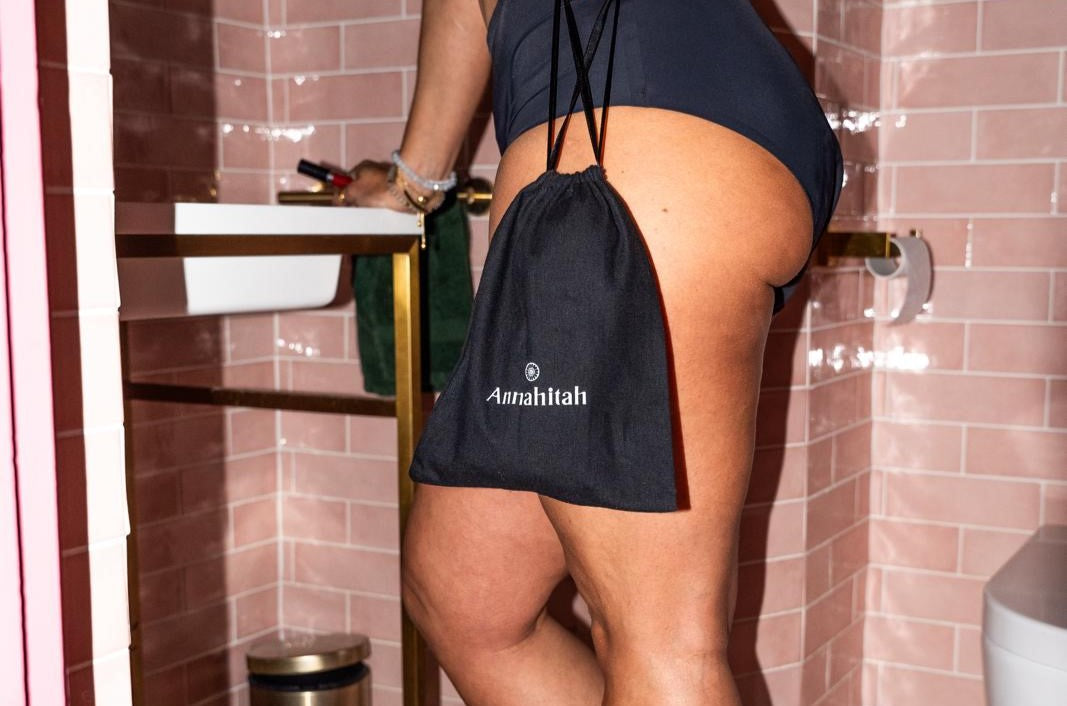
When she does need to change, the method is simple. Spare pair in her bag. Into a cubicle, swap them over, and the used pair goes into a washable drawstring bag that closes. At home, rinse it in cold water and wash at 30°C with dark colours. No softener, no bleach.
That bag is the whole system. Every Annahitah order arrives with an organic cotton drawstring Eco-bag made for exactly this, and it washes at 30 or 40 degrees. If she’s packing a school kit, a discreet Eco-bag for school bags with one spare pair inside is the one item that turns “what if” into “fine”.
A used pair sitting in a closed cotton bag for a few hours is no different from a used pair in a laundry basket. It gets rinsed and washed that evening.
Can you do PE and swimming on your period?
Yes, PE is fine on your period, and the NHS lists gentle exercise such as swimming, walking and cycling among the things that can help with period pain. The problem has never been the exercise. It’s the fear of leaking in front of a class.

The numbers back that up. The Youth Sport Trust’s 2024 Girls Active survey of more than 15,000 pupils found 61% of girls aged 11 and over worry about leaking through their PE kit, and 42% aren’t at all comfortable talking to their PE teacher about periods. The same survey found 86% of girls aged 7 to 8 enjoy PE, falling to 56% by age 14 to 15. Women in Sport’s 2022 research with 4,000 teenagers found 78% of girls avoid sport when they’re on their period.
Period pants fix the part of this they can fix. A Super Heavy pair under PE shorts holds through a lesson with nothing to shift or check during a bleep test or a hockey match. The seamless styles Shanti and Odessa disappear under tight kit.
Swimming is the honest exception. Annahitah doesn’t make period swimwear yet, and ordinary period pants aren’t designed for the pool. Options are a tampon if she’s comfortable with one, or a quiet word with the PE teacher to sit out on her heaviest day.
Parents can help here too. A 2023 Nuffield Health survey of 2,002 girls aged 11 to 16 found 44% of parents had made an excuse to get their daughter out of PE. Its advice is to avoid excusing her by default and help her find products that let her take part.

A fit for your flow.
Find your level of protection, then choose the shape that feels right for you.
Find your pair Explore styles, flow ratings & sizesWhat if a teacher says no to the toilet?
There’s no national rule on toilet access during lessons, so the practical fix is to ask the form tutor or school nurse for a toilet pass before it becomes a problem. Child Law Advice confirms that no law or national guidance sets when pupils may use the toilet; each school writes its own policy.
That means the route is through the school, not around it. Most schools have a pass or card system for pupils who need the toilet at short notice, and a note from a parent asking for one on period days is a normal request. A single line from the girl works too: “I get heavy periods and might need to go during lessons.”
Pupils with a medical condition should be supported under the DfE’s guidance on medical conditions in school, which is where toilet cards tend to sit. Periods on their own aren’t a medical condition, so the pass is a courtesy most schools extend rather than something the law hands her. It’s still worth asking for.
Period pants help here as well. A girl in a Super Heavy pair who can’t get to the toilet for an hour is already wearing the backup.
Can you get free period products at school?
Yes, in England state-funded schools and colleges can order free pads, tampons, menstrual cups and period pants through the Department for Education’s period product scheme, and Scotland and Wales have their own arrangements. The DfE scheme covers primaries with Year 5 and above, secondaries, special schools, alternative provision and 16 to 19 colleges. Products are delivered by the supplier phs, and the scheme is confirmed for 2026-27 and 2027-28, with provision to extend to 2028-29.
The guidance also says pupils should be told about reusable options and should be able to get products without having to ask. That second part matters. Girlguiding’s 2022 research found 54% of girls felt uncomfortable asking school for products, and 80% of 11 to 18-year-olds had never been asked which products they wanted.
| Nation | What’s in place | Who it covers |
|---|---|---|
| England | DfE period product scheme (includes period pants) | State schools with Year 5+, special schools, 16-19 colleges |
| Scotland | Period Products (Free Provision) (Scotland) Act 2021, in force since August 2022 | All schools, colleges and universities; anyone who needs them |
| Wales | Period Proud Wales Action Plan and period dignity grant | All schools; target of 90-100% plastic-free or reusable products by 2027 |
Scotland made free provision a legal duty for councils and education providers, and described itself as the first country in the world to do so. Its guidance asks schools to consult pupils on which products to stock, and some already stock period pants. Carluke High School, for example, runs a period pants pilot alongside free products in several spots around the building, no asking required.
If your daughter’s school doesn’t seem to offer anything, email the office. In England the school can order period pants in a range of sizes at no cost to itself.
What goes in a school-bag period kit?
One spare pair of period pants, the Eco-bag, a few wipes and a dark layer cover almost every situation she’ll meet at school. Keep it small enough to live in the bottom of her bag permanently, and add spare black knickers and a pad or two for a girl who hasn’t started yet. Our first period kit checklist sets out the full home and school kits.
Tell her who to go to if it starts in a lesson: the school nurse, the form tutor or a trusted friend. And tell her a jumper tied round the waist hides a stain until she can sort it out.
What are the rules on painkillers at school?
Usually only with written parental consent, and many schools prefer to give paracetamol from their own stock rather than let pupils carry it, so check the school’s medicines policy before you put anything in her bag. Policies vary between schools. The Department for Education publishes statutory guidance on supporting pupils with medical conditions, and schools build their own rules from it.
In practice that looks like a signed consent form at the start of the year, and the school office handing out a single dose at lunchtime when asked. Somerset Council’s guidance notes that schools decide for themselves whether to give non-prescription medicines at all. Some do, some don’t.
The NHS self-help list for period pain is paracetamol or ibuprofen, a heat pad or warm bath, and gentle exercise. If pain stops her doing her usual activities, or it’s severe and painkillers haven’t helped, that’s a GP conversation, not a school one.
How do parents and schools make periods less stressful?
Girlguiding’s research points to two things: girls want to be asked which products they’d like, and they want to get them without having to ask anyone. A parent can raise both with a school in one email.
At home, the NHS suggests treating periods as an ongoing conversation rather than a one-off talk. For school, that means running through the plan together before her first period: where the kit is, who she tells, what the toilet arrangement is, and that a leak is a nuisance rather than a disaster.
Schools in England are expected to cover menstrual wellbeing in relationships and health education, in primary as well as secondary, and the guidance says menstruation should be taught before it starts where possible. Schools are also expected to make sensitive arrangements for girls to manage their periods, including asking for products. If your daughter’s school isn’t doing that, you’re on firm ground raising it.