
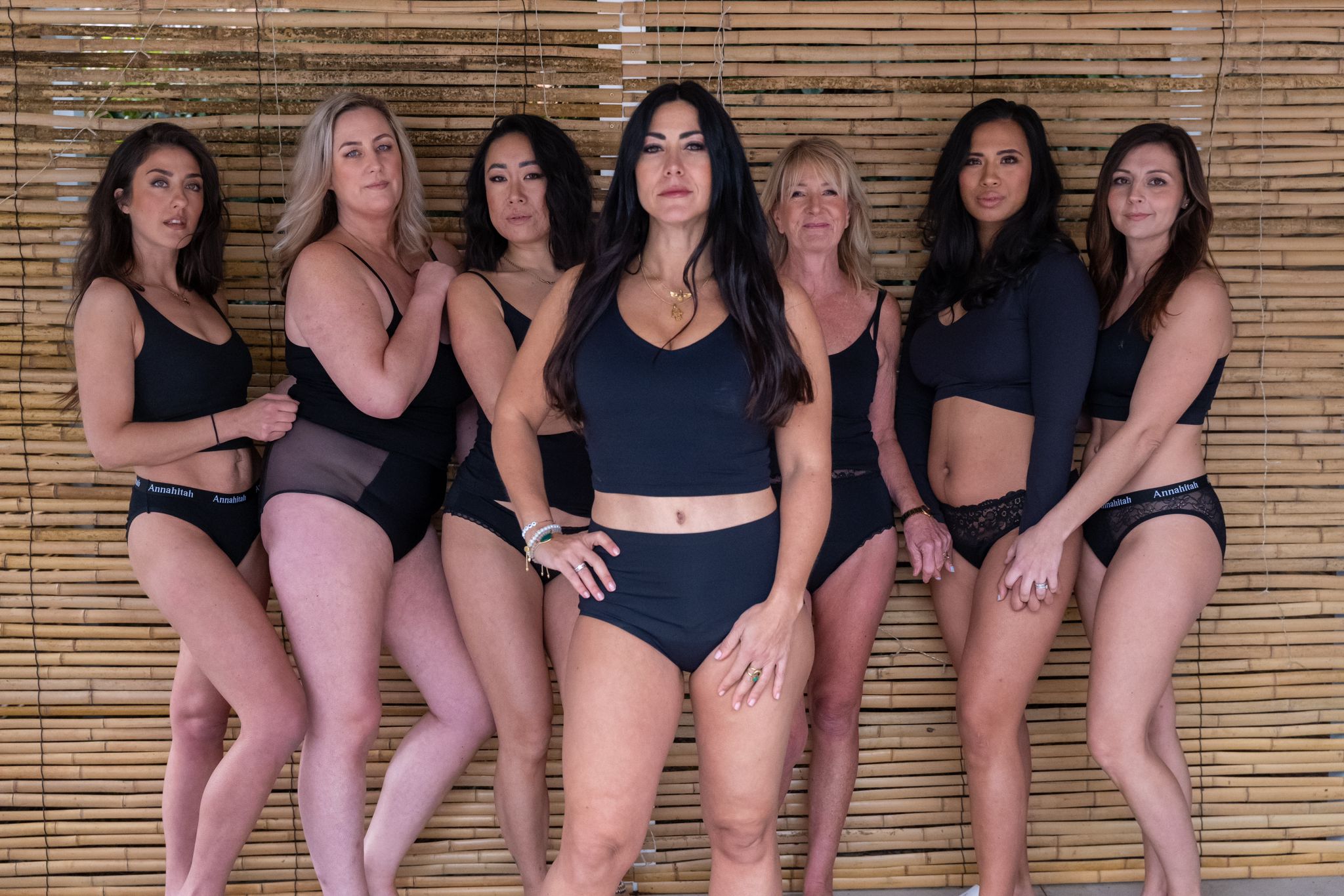


What are period pants?
Period pants are ordinary-looking knickers with a built-in absorbent panel (the gusset) that soaks up menstrual blood, backed by a thin waterproof layer that stops it reaching your clothes. You’ll also hear them called period knickers, period underwear or leak-proof pants. All of those mean the same thing: underwear that does the job of a pad without anything disposable.
From the outside, a good pair looks like normal underwear. The difference is in the crotch, where several layers of fabric sit one on top of another. The one against your skin pulls fluid away, the middle layers hold it, and the layer nearest your clothes blocks it.
Annahitah calls its version Pro Flo pants and builds them with four layers: an outer moisture-wicking layer plus absorbent, breathable middle layers. Other UK brands use three or four. The principle is the same across the board.
The NHS lists period pants as a period product, describing them as underwear with absorbent fabric and a leak-proof layer. That matters if someone has told you they’re a gimmick. They’re not.
How do period pants work?
Period pants work by moving fluid off your skin and into an absorbent core, with a waterproof barrier behind it that stops anything going further. The top layer wicks, the middle absorbs, the bottom blocks. Because fluid spreads sideways through the core rather than sitting in one spot, the surface feels dry for most of a wear.
That’s the short version, and for a buyer it’s enough. The waterproof layer is thin and lets vapour out, so a pair doesn’t feel like a plastic sheet, and a well-matched pair feels dry until the core is close to full.
Do period pants actually work?
Yes, period pants work for most periods when the absorbency matches the day. The doubt most people have is about volume, and the numbers are reassuring. The NHS says a whole period involves losing roughly 20 to 90 ml of blood over two to seven days, with the heaviest flow in the first two. Spread across a cycle, that’s less than most of us picture.
Where people run into trouble is wearing a light pair on a flooding day, or keeping one pair on long past the point it felt damp. Neither is a failure of the product. Both are a matching problem, and both are easy to fix once you know your flow.
What does “tampons’ worth” mean?
“Tampons’ worth” is how most UK brands describe how much a pair can hold, and it means the pair absorbs about as much as that number of regular tampons would. Annahitah’s Super Heavy styles (Shanti, Odessa, Valentina and Athena) hold 6 to 8 tampons’ worth. Heavy and Medium styles such as Serendipity, Lilah, Luna and Gaia hold 3 to 5 tampons’ worth per wear.
There’s no industry-standard lab test behind these figures, and Annahitah publishes no millilitre number at all. Treat tampon equivalents as a guide to relative strength: a 6 to 8 tampon pair is for your heaviest days, a 3 to 5 pair for the middle of a period.
What did Which? find when it tested period pants?
Which? tested period pants in July 2026 with ten testers per pair and found the best pairs had no leaks and no smell after a full day’s wear. The worst leaked for one or two testers within four hours and started to smell slightly from five hours. Heavy-absorbency pairs across the market held the equivalent of 4 to 12 regular tampons, and most pairs air-dried within 24 hours.
Which? measured absorbency by timing how long a 5 ml drop took to soak in, then put every pair through 12 washes to check durability. The spread between best and worst is the thing to take away. Period pants as a category work; individual pairs vary.
Who are period pants for?
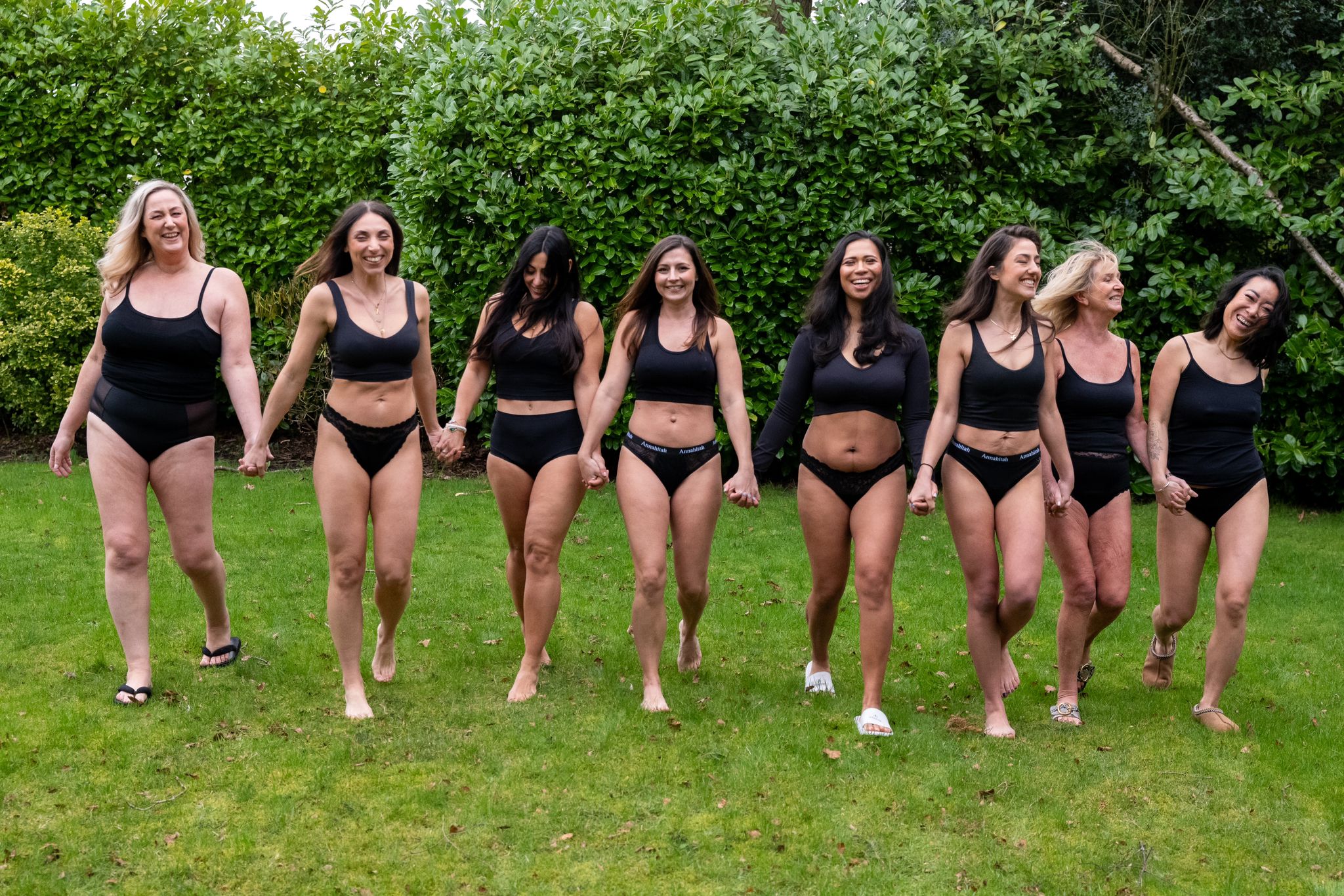
Period pants suit anyone who bleeds and would rather not use something disposable, and their use goes well beyond periods. Annahitah’s pants are sold for periods, bladder leaks, postpartum bleeding and sweat, and it’s the same layered gusset doing the work in each case.
Some people get more out of them than others:

- Teenagers starting their periods, because there’s nothing to insert and nothing to throw away at school. Annahitah’s signature teenage style, Valentina, is the only pair sold in XXXS.
- Anyone with heavy or unpredictable bleeding, including people with endometriosis, who want to stop checking the back of their skirt.
- New mums managing postpartum bleeding.
- People in perimenopause, when flow can change from one month to the next.
- Anyone with light bladder leaks.
- People who exercise on their period and want nothing to shift.
The point is that period pants aren’t one product for one type of person.
Which absorbency do you need?
You need an absorbency that matches your heaviest day and another that matches your lightest, not one that matches your average. Most periods start heavy and taper, so a sensible first set covers both ends.
Annahitah sells four levels:
| Level | Annahitah styles | Holds (as the site states it) | Suits |
|---|---|---|---|
| Light | Venus, Nirvana, Eden (all thongs) | No figure given | Last days, spotting, sweat, light bladder leaks |
| Medium | Aurora, Luna, Gaia | 3 to 5 tampons’ worth per wear (Luna, Gaia) | Middle days |
| Heavy | Serendipity, Lilah | 3 to 5 tampons’ worth per wear | Days two and three for many people |
| Super Heavy | Shanti, Odessa, Valentina, Athena | 6 to 8 tampons’ worth | First days, overnight, flooding, postpartum |
If you’re not sure, start higher than you think. An under-used Super Heavy pair costs you nothing but a slightly thicker gusset. An over-used Light pair costs you a pair of trousers.
Which style of period pants should you choose?
Choose the style you’d wear anyway, because a pair you don’t like won’t get worn. Period pants now come as thongs, briefs, Brazilians, high-waist pants, shorts, seamless styles and lace, and absorbency doesn’t follow style as neatly as you might expect. Annahitah’s Shanti is a high-waist, lace-trimmed, seamless pair at Super Heavy. Its three thongs (Venus, Nirvana, Eden) are all Light.
A few rules of thumb:

- High-waist styles such as Odessa and Shanti give tummy coverage and suit overnight and heavy days.
- Thongs and seamless styles disappear under leggings and tight clothes.
- Lace and Brazilian cuts such as Serendipity, Lilah and Athena are for people who want period underwear to look like the rest of their drawer.
- Short styles (Shanti, Odessa, Luna) cover the most.
Every Annahitah pair is black, so colour isn’t a decision you need to make.

A fit for your flow.
Find your level of protection, then choose the shape that feels right for you.
Find your pair Explore styles, flow ratings & sizesWhat size period pants do you need?
You need the size that matches your waist and hip measurements in centimetres, not the number on your jeans. Annahitah’s adult sizes run XXS (UK 4-6) to XXL (UK 16-18), with a teen range starting at XXXS (UK 2-4, waist 60-64 cm, hip 79-83 cm). The site says its sizes run generous, so if you’re between two, pick the smaller.
A pair that gapes at the gusset leaks however absorbent it is. Fit matters as much as level. Wrong sizes can be exchanged within 30 days if the pair is unworn.
Are period pants hygienic and safe?
Yes, period pants are hygienic when you change them before they saturate and wash them after every wear, and they’re safe for most people. Two questions come up again and again from UK buyers: silver and PFAS.
Silver first. Some brands add silver to the gusset as an antimicrobial, and when Which? tested period pants in November 2023 it found silver in several pairs, at levels from 0.9 mg/kg up to 126.7 mg/kg, with experts concerned it could harm the beneficial bacteria in the vagina. Annahitah uses no silver in any pair. Where it adds an antimicrobial agent for odour control (on six styles), that agent is silver-free, and six other styles carry no treatment at all, so you can choose.
PFAS, the so-called forever chemicals, are a separate worry. OEKO-TEX STANDARD 100, which Annahitah’s suppliers hold, has banned the intentional use of PFAS since 2023. That isn’t the same as a test on a finished pair, and Annahitah makes no PFAS-free claim; you can email the brand if you want to ask about testing.
On smell: a fresh pair shouldn’t smell. Odour means a pair has been worn too long, hasn’t been rinsed well or hasn’t dried fully, and each of those has a fix.
How long can you wear one pair of period pants?
You can wear one pair until it starts to feel damp, which on a light or medium day may be the whole day and on a heavy day may mean a change at lunchtime. Several UK brands quote figures between 8 and 12 hours per pair, and Which? sums up the general hygiene advice as no more than 12. Annahitah doesn’t publish an hours figure; its own wording is that on a super heavy day you can wear its Super Heavy pants all day and switch to a second Super Heavy pair overnight. Dampness, a heavier gusset or blood sitting on the surface are your signals, not the clock.
How many pairs do you need and what do they cost?
Most people get through a cycle with three to five pairs, as long as they wash and dry between wears, and that’s Annahitah’s own guidance. Fewer if your periods are short and light. More if you’d rather not run the machine mid-week.
Single pairs from UK brands are priced per pair and bundles bring the cost per pair down. Since 1 January 2024, period pants have carried no VAT in the UK, which removed the 20% tax they’d had until then (other period products lost VAT in January 2021). Retailers weren’t obliged to pass the saving on, so prices differ between brands.
Set against disposables, the maths changes with time. Hertfordshire County Council estimates that one person uses around 11,000 single-use period products in a lifetime. A pair of period pants that lasts 18 months to three years, Annahitah’s stated lifespan with proper care, replaces hundreds of them. Once you’ve worked out your flow and the styles you like, you can shop all period pants and build a set of three to five, or start with a bundle.
How do you wash period pants and how long do they last?
Rinse them in cold water after taking them off, machine wash on a gentle 30°C cycle with other darks, skip fabric softener and bleach, and hang them to dry. That’s Annahitah’s full care routine, and it’s close to what most UK brands advise. Softener coats the fibres and cuts absorbency. Heat damages the waterproof layer.
With that care, Annahitah expects a pair to last 18 months to three years. Which? found most pairs air-dry within 24 hours, which is why a set of three to five works across a cycle.
One point of honest disagreement. Germany’s federal risk assessment body, the BfR, notes that a 30 to 40°C wash doesn’t kill all bacteria and suggests 60°C where the fabric allows, while most brands cap the temperature to protect the layers. Rinsing the blood out first, which the BfR also recommends, is the step everyone agrees on.
Are period pants worth it?
Yes, for most people in the UK, period pants are worth it on comfort, waste and cost over time, with the caveat that the first set is an upfront spend. Mintel found in 2022 that about one in five British women had bought period pants in the previous year, and that six in ten non-users thought reusables were less hygienic. That last worry is the one that fades fastest once you’ve worn a pair.
Where they earn their place:
- You hate the feel of pads or the faff of tampons.
- Your flow is heavy enough that you double up at night.
- You want fewer things in your bathroom bin. Annahitah’s B Lab profile says the brand kept more than 120,000 tampons out of landfill in its first year.
- You’re buying for a teenager who’d rather not deal with disposables at school.
Where they’re less of a fit:
- You want something you can bin when travelling.
- You can’t dry washing between wears.
- You’d rather not pay for several pairs at once.
A fair trial is a mixed set: one Super Heavy, one Heavy or Medium, one Light, worn through a full cycle with a pad as backup the first time. Annahitah’s founder, Nina Alexander, started the brand after finding existing period pants unflattering, and whether a pair feels like underwear you’d choose anyway is the question that decides it for most people.
What are the best period pants in the UK?
The best period pants in the UK are the pair that matches your heaviest day, fits snugly at the gusset and gets worn without a second thought, and no one brand wins that for everyone. Which? publishes tested Best Buys (the scores sit behind its paywall) and reports which pairs leaked or smelt within a working day, so its list is the independent place to start if you want numbers.
When you compare brands yourself, these are the things to check:
- Absorbency stated per level. If you have heavy days, you want a top level of at least 6 tampons’ worth.
- Silver-free, or an antimicrobial you can opt out of. Which? sets its Best Buy silver threshold at under 0.1 mg/kg.
- Fabrics or suppliers certified by OEKO-TEX STANDARD 100 or GOTS.
- A wash temperature you’ll keep to, and a lifespan the brand is prepared to put in writing.
- Sizes given in centimetres, and an exchange policy for unworn pairs.
On Annahitah’s site, that reads as silver-free pants, suppliers certified by GOTS and OEKO-TEX, a stated lifespan of 18 months to three years, sizes from XXXS to XXL and 30-day exchanges.
Other UK brands answer the same questions in their own ways, so read Which? alongside any brand’s own pages before you decide. Choosing by flow first, then style, then size, then the shape of your week (school, the gym, night shifts, travel) is the order that works, and we cover that in our choosing guide with a worked example for each.