


How do you wash period pants?
Rinse cold, wash at 30°C on a gentle cycle with darks, use a gentle detergent, no softener, no bleach, hang to dry. Five steps, and the first one does most of the work.
| Step | What to do | Why |
|---|---|---|
| 1. Rinse | Cold water, as soon as you take them off, until the water runs clear | Cold water lifts fresh blood; warm water sets it |
| 2. Wash | 30°C, gentle cycle, with other dark colours | Cleans the fabric without stressing the elastane or the layers |
| 3. Detergent | A gentle or mild detergent, normal dose | Strong detergents and stain removers can wear the layers |
| 4. Skip | No fabric softener, no bleach | Softener coats the wicking fibres; bleach damages the layers |
| 5. Dry | Hang or air dry; tumble on low only if you must | Heat is the main thing that shortens a pair’s life |
Those are Annahitah’s instructions from its Wear and Care page and FAQ. Other UK brands differ in small ways, mostly on temperature, and we’ll flag where they do.
Why do you rinse period pants in cold water first?
Cold water lifts fresh blood out of the fibres before it has a chance to set, and warm water does the opposite. Brand A’s washing tips page puts it plainly: warm water sets blood stains. Every UK brand we checked, plus Which?, says to rinse in cold water as soon as you can after wearing.
Hold the gusset under the cold tap, or rinse in the shower as Brand A suggests, and squeeze gently until the water runs clear. Brand B uses “runs clear” as the test. It takes a moment on a light day and a little longer on a heavy one.
The rinse and the machine wash do different jobs. The rinse removes the blood. The wash removes sweat, skin cells and whatever the rinse left, and freshens the fabric. If you skip the rinse and go straight to the machine, a 30°C wash won’t shift set blood, and you’ll see faint marks that never quite go.
Should you soak period pants?
No, not usually; a short cold soak helps with dried-in blood, but hours in water or vinegar is advice from some brands rather than something most require. If you’ve rinsed promptly, you won’t need to soak at all.
Brand B and Brand C both allow a 10-15 minute cold soak after the rinse. Brand A suggests an hour-long cold soak with a few drops of essential oil to freshen pants between periods. Brand D’s guidance doesn’t call for soaking. Annahitah’s instructions don’t mention soaking either way; a short cold soak isn’t going to hurt, and a long warm one might.
Keep any soak cold and keep it short.
What temperature should you wash period pants at?
Annahitah says 30°C on a gentle cycle; other UK brands allow up to 40°C, and nobody recommends hotter. Brand A says 30 or 40°C, Brand E 40°C, Brand B cold to 40°C maximum, Brand D cold. Which?’s August 2026 advice is a cool wash at 30-40°C depending on the brand.
Why 30°C? Which?’s washing-machine temperature guide says a 30°C wash uses about 38% less energy than 40°C, suits synthetics and delicates, and holds colour better, though it shifts fewer tough stains. Period pants are synthetics and delicates: elastane for stretch, nylon or cotton or bamboo for the body, and absorbent and leak-resistant layers in the gusset. The cold rinse has already dealt with the stain, so the cooler wash is the gentler choice with nothing lost.
One thing to be clear about. Which? also notes that neither 30 nor 40°C kills most bacteria without a bleach-based detergent, and that a 60°C wash is what’s needed for a hygiene wash. Period pants are not a hygiene-wash item. They’re worn against skin like any other underwear, every brand warns against hot washes, and a regular wash after a cold rinse is what the makers ask for.
Which detergent should you use, and why no fabric softener?
Use a gentle or mild detergent at a normal dose, and never fabric softener, because softener leaves a film on fibres that stops the wicking layer pulling moisture away from your skin. Annahitah, Brand B and Brand C all say gentle detergent; Brand E says any ordinary laundry detergent is fine; Brand D warns against strong detergents and stain removers.
The softener point is the one people most want explained. Softener works by leaving a coating on the fibres, which is what makes towels feel soft and is also why towel labels tell you to skip it. Brand B describes the problem as residue building up on the absorbent layers; Brand F says softener can break down the leak-resistant layers over time.
So a softened pair of period pants is a pair whose top layer no longer wicks and whose middle layers hold less. It still looks fine. It just leaks sooner.
Bleach is the other no. Annahitah, Brand E and Brand G all rule it out, because it attacks the fabric and the layers rather than just the stain.

A fit for your flow.
Find your level of protection, then choose the shape that feels right for you.
Find your pair Explore styles, flow ratings & sizesCan you wash period pants with other clothes?
Yes, a normal dark load at 30°C is fine, and a mesh wash bag keeps them from tangling with hooks and zips. Annahitah says to wash with other dark colours; Brand B says darks or reds; Brand E says to put them in with your usual load.
The dark-load rule is about dye and about what else is in the drum. A heavy denim load with metal buttons is rougher on lace trim than a load of t-shirts. A mesh bag solves that. Brand E recommends one in the machine; Brand D says to use a laundry bag; Brand A uses a mesh bag to store pants between periods and keep them separate from everyday underwear.
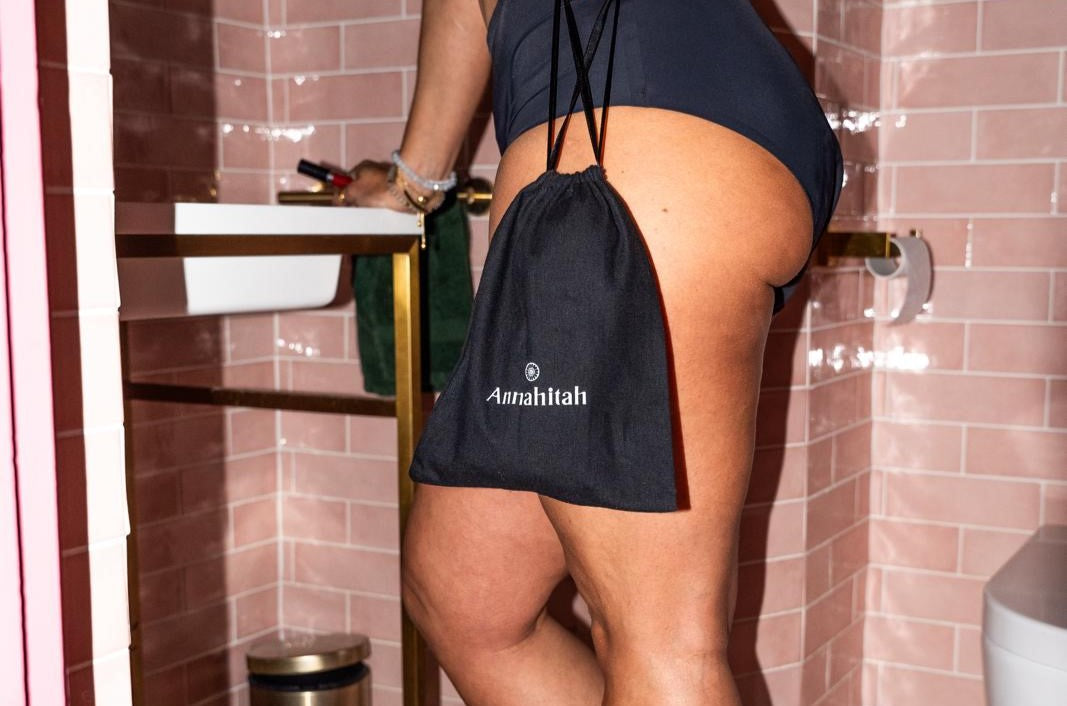
Annahitah’s organic cotton Eco-bag is designed for carrying pants, not as a machine wash bag, so use a mesh delicates bag in the drum. The Eco-bag itself can be washed at 30 or 40°C and air dried.
How do you dry period pants?
Hang them indoors on an airer, or on a line out of direct sun and away from radiators, and roll them in a towel first if you need them by morning. Annahitah’s preference is hanging or air drying for the longest life, with a low-heat tumble allowed if you have to.
Most other brands are stricter. Brand A, Brand E and Brand G say never tumble dry; Brand G says heat damages the absorbent core; Brand D’s support page says repeated high heat gradually breaks down the absorbent technology. Brand B allows a low tumble if it’s needed, which is where Annahitah lands too.
Drying time depends on your house. A pair hung on an airer in a warm room with some airflow is usually dry by the next day; a pair rolled firmly in a dry towel first, as Brand B suggests, dries faster. Avoid draping them over a radiator or in front of a heater, because that’s the same heat problem as the tumble dryer, just slower. None of the brands we checked publishes a drying time in hours, and we won’t invent one.
How do you get stains out of period pants?
The cold rinse prevents most stains, and a bicarbonate of soda paste left on for a few minutes before the wash is the usual next step if a mark survives. Strong stain removers are the thing to avoid.
Brand B suggests three options for stubborn marks: a bicarbonate paste left for 5-10 minutes, hydrogen peroxide dabbed on, or a soak in a cup of white vinegar in lukewarm water for about an hour. Treat those as common advice from one brand rather than universal. Brand D advises against stain removers and strong detergents altogether, and Annahitah’s own instructions stop at “no bleach”. If you want to try one, bicarbonate is the mildest.
A faint shadow on the inside of a black gusset isn’t a hygiene problem after a proper wash; it’s cosmetic. If a pair smells after washing, that’s a different issue and usually means it was left damp too long before the rinse.
Do you need to sterilise period pants?
No, a regular wash after a cold rinse is enough for a garment worn against the skin, unlike a menstrual cup, which goes inside the body and needs sterilising between periods. Brand B says no sanitising is needed with regular washing; Brand G’s guide to reusable products makes the same distinction between cups and pants.
Hot washes, bleach and antibacterial additives are the three things people reach for when they want pants to feel “properly clean”, and all three shorten the life of the pair. Some Annahitah styles have a silver-free antimicrobial finish for extra odour control between changes; it’s a comfort feature, not a substitute for washing.
How does good care affect how long period pants last?
Every heat, softener or bleach mistake chips away at absorbency, which is why Annahitah quotes 18 months to 3 years depending on care rather than a single figure. The pairs that reach three years are the ones that got a cold rinse, a 30°C wash and an airer.

Other brands set expectations in washes: Brand E guarantees its standard range for more than 50 washes and Brand G quotes around 100. Signs of wear, how to stage replacements and what to do with old pairs are in our how long do period pants last article.
For days out, where the care routine starts, keep a spare pair and the used one apart in the washable organic cotton Eco-bag that comes with every Annahitah order, then rinse the used pair the moment you’re home.