


Which period product is best for you?
The best period protection is the one that matches your flow, fits your routine and feels right in your body, and for many people that’s two products rather than one. Someone who swims three mornings a week has different needs from someone who bleeds heavily for two days and lightly for four.
The cost row in the table uses Which? prices from May 2022, the most recent UK costing we could verify, and every other figure is sourced in the sections that follow.
| Disposable pads | Tampons | Menstrual cup | Menstrual disc | Period pants | |
|---|---|---|---|---|---|
| Cost over two years | about £192 for pads and tampons combined (Which?, 2022) | included in the £192 | about £20 (Which?, 2022) | around £40 for a reusable disc (Brand A guide) | about £96 for eight pairs (Which?, 2022) |
| Change frequency | every 3-4 hours (Brand B), every 4 hours (Brand C) | every 4-8 hours (Brand D) | empty every 4-8 hours (Brand G) | empty every 4-8 hours on heavy days (Brand A) | when damp; Which? suggests up to about 8 hours |
| Maximum wear time | no NHS figure; brands say about 4 hours | 8 hours (Brand D UK leaflet) | 12 hours (Brand G); 8 hours under Australian and French advice | 12 hours (Brand E) | brand-dependent; Which? says never beyond 12 hours; Annahitah gives no hours figure |
| Capacity measured with blood (BMJ 2023) | 4 ml light to 31-52 ml heavy | 20 ml regular, 31-34 ml heavy | 22-35 ml across one brand’s sizes | 40-80 ml, average 61 ml | one US brand tested only; UK brands label in tampon equivalents |
| Reusable? | No (washable cloth pads exist) | No | Yes, up to about 10 years | Reusable and single-use versions exist | Yes; Annahitah quotes 18 months to 3 years with care |
| Best for | first periods, backup, travel | swimming, sport, discretion | long wear, low cost, swimming | heavy flow, period sex, a low cervix | all-day comfort, nights, teens, no insertion |
| Learning curve | none | a little | several cycles | several cycles; removal can be messy | none, though absorbency builds over the first few washes |
| Health notes | rash from friction, adhesive, fragrance or trapped heat | TSS risk rises with wear time; use the lowest absorbency | rare TSS reports; coil users should ask their fitter | as for cups | no insertion; change when damp; check a brand’s silver policy |
What period products can you choose from in the UK?
The NHS lists four main options on its periods page: pads, tampons, menstrual cups and period underwear. Menstrual discs and washable cloth pads round out the choice, though the NHS page doesn’t describe them.
Pads are absorbent strips that stick inside your knickers. Tampons are compressed cotton cylinders that sit inside the vagina and come out by a string. Cups are soft silicone bells that collect rather than absorb and are rinsed and reused. Period pants build the absorbent layer into the knicker itself, with a leak-resistant layer underneath.
Discs are the newest arrival on UK shelves. A disc is a flexible ring with a thin bowl that sits higher than a cup, tucked behind the pubic bone in the vaginal fornix. Some brands sell single-use discs in the UK, and others make reusable ones.
How do period pants compare with pads?
Both work outside the body and both absorb rather than collect, but period pants replace the pad and the knicker with one washable garment. There’s nothing to stick down and nothing to shift when you walk.

Pads win on price at the till and on convenience when you’re away from a washing machine for days. They’re also the obvious backup on a flooding day. Pad rash is the main complaint: the UK brand Brand B puts it down to friction, adhesive or fragrance on the skin, and heat and moisture trapped against it.
Period pants are made from fabric that moves with you, so the friction problem mostly goes away. The trade-off is laundry.
How do period pants compare with tampons?
A tampon works inside the body and must come out within 8 hours; period pants work outside and are changed when they feel damp. That one difference shapes everything else.
Tampons are discreet, cheap per unit and the product most people reach for when they swim. The thing to respect is wear time. The Brand D UK leaflet says to change a tampon every 4-8 hours, use the lowest absorbency that copes with your flow, and put in a fresh one before bed and change it as soon as you wake. Those rules exist because the risk of toxic shock syndrome (TSS), which the NHS describes as rare but able to come on quickly, is tied to leaving a tampon in too long.
Period pants have no insertion, no string and no 8-hour clock. On heavy days plenty of people wear both. Our period pants vs tampons article covers the NHS TSS symptoms and a routine for wearing both.
How do period pants compare with menstrual cups?
A cup collects blood inside the vagina and can be worn for up to 12 hours according to Brand G, while period pants absorb on the outside and have no suction or seal to learn. Both are reusable and both cost little per year once bought.
The cup has the longer wear time and the longer life. Brand G says its cups last up to 10 years with care; Brand A puts cups at 5-10 years and around £20-25 to buy. Cups also work for swimming and sport. The catch is practice. One Hertfordshire resident quoted on the county council’s sustainable periods page said it took about four periods to get used to hers, and emptying one in a public toilet takes some planning.
Period pants have none of that. You put them on. They also cover the nights and light days when a cup feels like more than you need.
How do period pants compare with menstrual discs?
A disc sits higher than a cup, held in place by the rim rather than suction, and held the most blood of any product in a 2023 lab study; period pants sit outside and ask nothing of your anatomy. Discs can stay in for up to 12 hours according to Brand E, and because they leave the vaginal canal clear, they’re the one product that can be worn during penetrative sex.
Discs suit heavy flow, a low cervix and anyone who found cup suction uncomfortable. Removal is the weak point: it can be messy, and some wearers experience “auto-dumping”, where the disc empties a little when the pelvic floor contracts on the toilet. That’s normal with a disc and startling the first time.

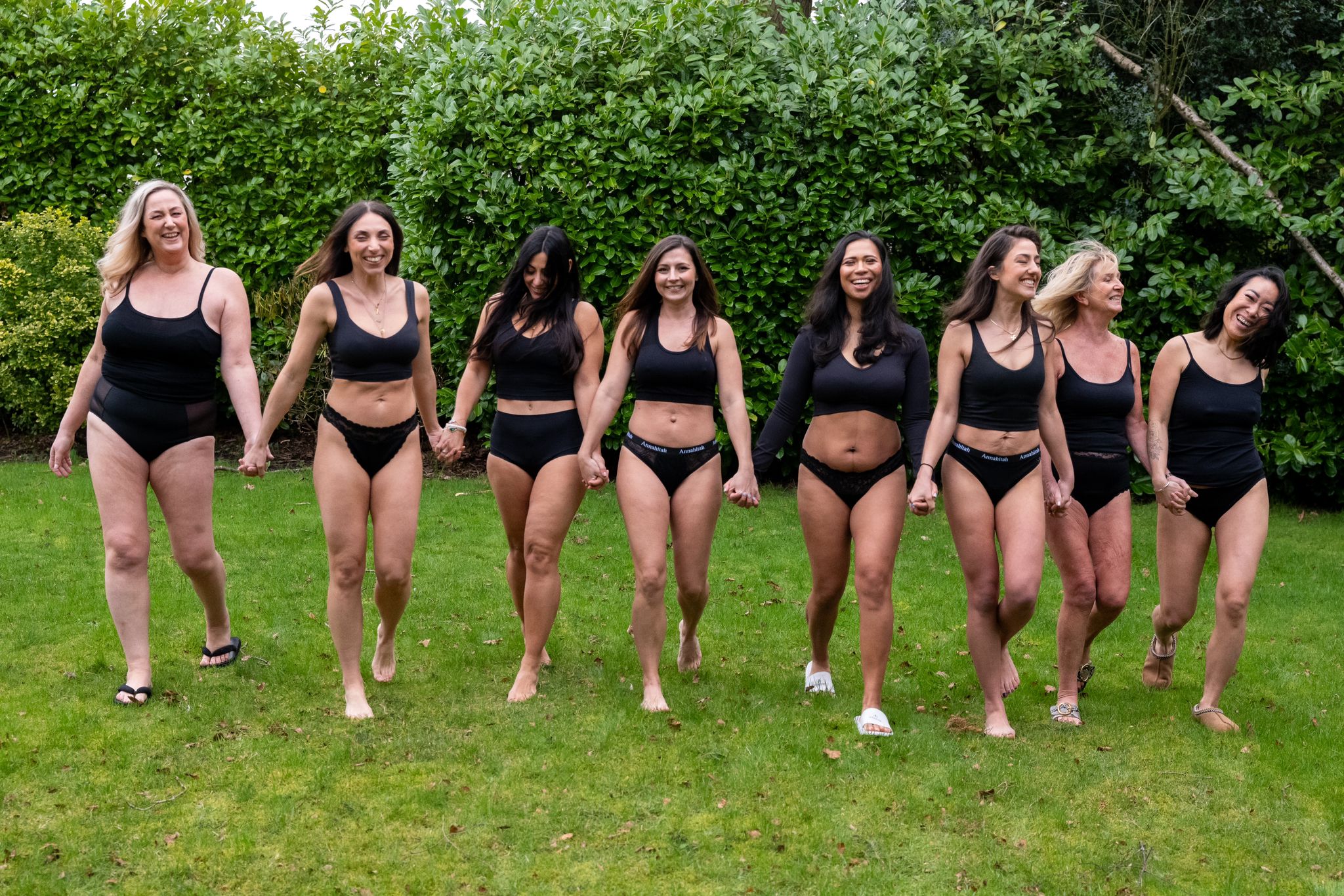
A fit for your flow.
Find your level of protection, then choose the shape that feels right for you.
Find your pair Explore styles, flow ratings & sizesWhich period product holds the most?
In a 2023 study published in BMJ Sexual & Reproductive Health, menstrual discs held the most blood, averaging 61 ml, with heavy-day pads at 31-52 ml, heavy tampons at 31-34 ml, a regular tampon at 20 ml and one cup brand’s three sizes at 22-35 ml. The study tested 21 products using expired human red blood cells rather than the water or saline that manufacturers tend to use, and the authors pointed out that the two methods give different results.
The same study tested one US brand of “super” period underwear in three sizes and found it held 1-3 ml of blood, well below what the label implied. Read that carefully. It’s one brand, three pairs, one lab, and it conflicts with what every UK brand claims. It is not a verdict on period pants, and it tells you nothing about Annahitah, which wasn’t tested. What it does give you is a sharp question to ask any brand: how it measures capacity, and with what.
UK brands label pants in tampon equivalents rather than ml. Annahitah rates its Super Heavy styles (Shanti, Odessa, Valentina and Athena) at 6-8 tampons’ worth, and its Heavy and Medium styles at 3-5 tampons per wear. Which? found in its August 2026 test that heavy pants across the brands it tested held roughly 4 to 12 regular tampon equivalents when measured with water.
How long can you wear each period product?
Tampons have the firmest limit at 8 hours, pads are changed every 3-4 hours by UK brand guidance, cups and discs can stay in for up to 12 hours by brand guidance (8 under some regulators), and period pants are changed when they feel damp rather than by the clock.
| Product | Change interval | Hard limit | Who says so |
|---|---|---|---|
| Tampon | every 4-8 hours | 8 hours | Brand D UK leaflet |
| Pad | every 3-4 hours | none published by the NHS | Brand B; Brand C |
| Cup | empty every 4-8 hours | 12 hours (Brand G); 8 hours (Australian TGA, French ANSES, Brand A) | Brand G FAQ; Brand A guide |
| Disc | empty every 4-8 hours on heavy days | 12 hours | Brand E; Brand A guide |
| Period pants | when damp | never beyond 12 hours (Which?) | Which? August 2026 test |
Annahitah publishes no hours figure for its pants. The brand’s guidance is that a Super Heavy style can be worn through a heavy day and swapped for a second Super Heavy pair overnight, and that you change when the pants feel damp. Which? found the best pants in its test had no leaks and no odour after a full day’s wear, and the worst leaked after four hours, so the spread between brands is real.
Which period product is cheapest over two years?
A menstrual cup is the cheapest at about £20 over two years, period pants come next at about £96, and disposables cost about £192 over the same period, all at Which? prices from May 2022 for a medium flow and twelve periods a year.
Which? based the disposable figure on Bloody Good Period’s estimate of around £8 per period, and the pants figure on eight pairs at £12 each, which it expected to last around two years. It put the break-even point for pants at about six months of exclusive use. Channel 4’s FactCheck team reached a similar figure in 2018, at roughly £128 a year on products.
Own-brand supermarket tampons were 2-4p each and pads 3-4p each in 2022, with branded versions at 9-13p, so the gap between disposables and reusables is smaller if you buy own-brand and bigger if you don’t.
One change since those prices: VAT. Pads, tampons and cups were already zero-rated in 2022. Reusable period underwear was still standard-rated until The Value Added Tax (Women’s Sanitary Products: Reusable Underwear) Order 2023 brought it into the zero-rated group from 1 January 2024. Every pair bought in the UK since then has had no VAT on it.
Prices move, so treat the Which? numbers as a shape rather than a quote. Anything you wash beats anything you bin within a year or so.
Which period product is best for the planet?
Reusable products of any kind beat disposables, and the UK figures behind that are large: an estimated 11,000 disposable period products per person over a lifetime, according to the Women’s Environmental Network, and around 200,000 tonnes of menstrual waste landfilled each year, according to City to Sea.
The flushing problem is separate from the landfill one. City to Sea estimates that up to 2 billion period products are flushed in the UK each year, and that period products are the fifth most common item found on European beaches. The Marine Conservation Society’s 2020 beach clean found that almost 9% of litter was sewage-related debris, about a tenth of it period products.
Plastic content matters too. The Environmenstrual factsheet, citing UNEP, says most single-use pads can be up to 90% plastic. Cups, discs and period pants all contain synthetic material, but a cup used for 10 years or a pair of pants worn for 3 replaces hundreds of single-use items.
Which product suits first periods, heavy flow, swimming, sleep and a coil?
External products suit first periods, discs and Super Heavy pants suit flooding days, only internal products work in water, pants are the easiest overnight option, and anyone with a coil should ask their fitter before using an internal product.

What suits a first period?
Pads and period pants, because nothing needs inserting. Brand F’s guide for tweens and Brand A’s reusable products guide both advise starting with external products. Annahitah’s teen sizing starts at XXXS (UK 2-4) in its Valentina style.
What suits a heavy flow?
Discs held the most blood in the BMJ study, and Super Heavy pants rated at 6-8 tampons’ worth are built for the same days. Many people with heavy periods wear both. If your bleeding is new, much heavier than usual or worrying you, see your GP.
What suits swimming?
Tampons, cups and discs. Period pants aren’t designed for swimming, and Annahitah doesn’t make swimwear yet. Pants do suit sport on land: Annahitah says its pants support all types of exercise, and its Nirvana and Venus G-strings are cut to disappear under gym kit.
What suits sleep?
Period pants, because there’s no 8-hour limit to wake up for. Annahitah’s Super Heavy styles are designed for extended wear and overnight protection. A cup or disc can also go through the night within its 12-hour window, with pants as the safety net.
What suits a coil (IUD) user?
Ask whoever fitted it. SH:24, an NHS-commissioned sexual health service, says some people are advised to avoid tampons and cups for a few weeks after fitting, that cups carry a small risk of pulling the coil out at any time (not only straight after fitting), and that there isn’t enough evidence to say tampons raise the chance of the coil coming out. Brand G suggests checking your string length during your period and always breaking the cup’s suction before removing it. Period pants have nothing to pull on.
Can you combine period products?
Yes, and pairing a tampon, cup or disc with period pants is the most common way to cover heavy days and nights without a pad. Brand C describes wearing pants with pads, tampons or cups on heavy days, and Brand F suggests a cup or tampon by day and pants at night.
The combinations that come up most:
- A tampon or cup for the flow, with Medium or Heavy pants in place of a pad to catch early leaks.
- A disc on the heaviest day, with Super Heavy pants for the auto-dump and the night.
- Pants alone on light and medium days, which for a lot of people is most of the period.
- A pad inside period pants for the first cycle while you learn to trust them.
If you’re ready to switch to period pants, the Fabulous Five bundle gives you two Super Heavy pairs, two Heavy and one Light, which is a rotation that covers a whole cycle; you can switch to period pants one pair at a time or all at once.